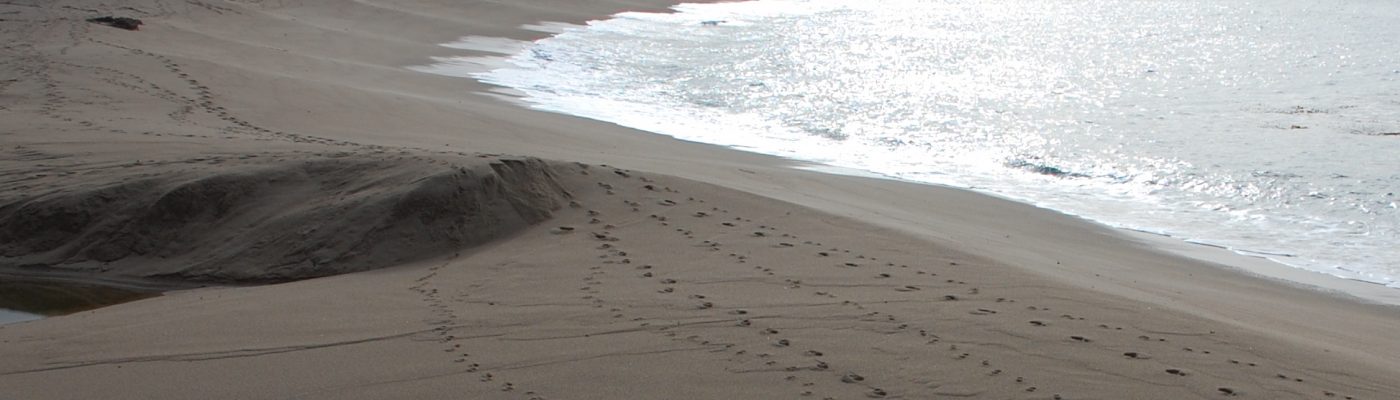
Uproar – a quote every Wednesday

21: “Here We Stand” (Walt Whitman)

        “I and this mystery here we stand.” -Walt Whitman

        A few days ago, I talked with a friend while an emotional storm blew through her mind. It was a sizable storm, and the winds howled about everything she would lose, and the rain poured down to mingle with her tears, and how, she asked, “How can I handle this?”
        I wonder if Whitman would say that she didn’t need to handle it. It was. Joy, sorrow, pain, connection, winds that howl and hills that sleep, and changes in our connections–all these things are, and the storms that turn our minds into darkened rivers of churning cloud shot through with rain and lightning can be handled no more than real storms can be held within our hands. But we can go out into them: today I saw an old friend, and we walked through the rain and the wind to a lake. I was soaked and cold by the time we were getting close, and then my friend asked, “Are we going to jump in?”
        A second later she added, “You’re looking at me like I’m crazy.”
        I hadn’t meant to be, but I probably was. I was cold and wet already. At the same time, I didn’t want to hold a good friend back.
        “I will if you want to,” I said. And so we did. The wind picked up and ran faster, running its cold hands along us before we made it to the water, and the water swept over us like a cold night happening in one great wave. Then we got out, tried to wipe some of the water away, tried to get dressed again without ending up with mud packed into our underwear. Standing there, we weren’t cold anymore: suddenly the storm felt lovely. Physically, I suppose, my skin’s pores had clamped down to hold in whatever heat my body could make, and my body had woken up to work at the making. But supported by all that, we just felt at home. We felt the storm around us, felt the chill, and felt alive in it.
        What if we treated the storms that we cannot handle in our minds the same way my friend saw the lake? What if we understood what we could understand, walked when we could walk, and stood (or knelt, or cried, or howled, or laughed) with the great mystery when we couldn’t hold the winds inside our hands? The storm I walked through today, of course, was a little one, in mild California. Perhaps sometimes you need a shelter of some kind, but building a shelter isn’t the same as trying to hold up your hands and control the wind. In any case, I think most of the emotional storms that pass through my mind aren’t that bad, and I think that, in trying to stand against them, in trying to direct them, I end up shouting myself hoarse and building walls that just get broken away and leave me amid the rubble.
        Standing beside the lake, the storm was strong, it was fierce and unexpected and entirely beyond me. In the face of that great mystery, what if we did not try to control or comprehend: what if we witnessed it, and were part of it?
        “I and this mystery here we stand.”

20: “Earth’s The Right Place For Love” (Frost & Minchin)

        “Earth’s the right place for love.” -Robert Frost, “Birches”

        “Isn’t this world enough?
        Just this world? Just this beautiful, complex,
        Wonderfully unfathomable, natural world?” -Tim Minchin, “Storm”

        Let’s start with three words: pedestrian, mundane, and last week’s trivial.
        According to the OED, to trivialize is to “render commonplace or trifling.” “Trivial” means “common, ordinary, everyday, familiar.” Google defines trivial as “of little value or importance,” pedestrian as “lacking inspiration or excitement; dull,” and mundane as “lacking interest or excitement; dull.” (A professor once told me that there are no synonyms in any language–two similar words always have different nuances, different dancing connotations, different feelings. Of course, for quick understanding, it’s nice to have easy, familiar definitions–is that why Google ties “pedestrian” and “mundane” so close together? Since starting this, I’ve gotten on a plane, gotten off a plane, and sat down in Houston, so I can’t check my OED anymore. Maybe I should make it my carry on: fit them with leather handles. They wouldn’t be very useful all the time, but they would be very useful sometimes, and I’d feel like a wizard).
        Pedestrian, mundane, trivial: uninteresting, uninspired, trifling. Those three are like washing your day-old dishes after work. Dull. I usually leave my dishes in the sink for a while, as though I didn’t want to do them. But whenever I actually stand up and walk over and start washing them, I rather like it. I like the daily, mundane practice of taking care of little things. Is that just me?
        These three are words for the everyday, and because they’re everyday, we’ve decided they’re cheap. I say they’re not. “Trivial” comes from trivialis, also “common,” but literally tri- (“three”) via (“road”), so “place where three roads meet.” A crossroads. A place we walk every day, a common place, and also a place where, day by day, we decide where we look, who we are, and what we spend our energy reaching toward. Mundane comes from mundanas, belonging to the world “as distinct from the church” notes etymonline.com, and once also meant “pure, clean; noble, generous.” Because our world is those things, even if it isn’t only those things. The “ped” in “pedestrian” means foot, so a pedestrian walks (just as an equestrian rides), and when I walk I find it a fine thing to do. These three Latin-born day-laborers are fine, thoughtful, and strong, but we’ve shoved them off into the poorer alleys in the city of our speech.
        People say that “familiarity breeds contempt,” but I don’t think it needs to. The commonplace is only boring when we don’t really look at it. My house’s backyard looks into a park where coyotes run and the trees reach fingers to the wind, but I almost never go out to enjoy that. I could, sitting on a Saturday, grading the endless papers; but I don’t. And then, last Saturday, I had someone over to the house, and we did. Together we walked those seven steps (pedestrians that we were) and looked at the mundane trees and the sky. The trivial view, that I could see every day. This place, where the three roads of past, present, and future (or thought, feeling, and perception; or you, me, and all the rest of the world), is enough for me. I’m glad to be here with you. It’s late, and I’m tired; it’s been two flights since I started writing this, and my back’s a little unhappy, and I’d like a shower, and this place, just here, is a good place to be. I find reverence. I find love. I find food to eat and work to do and laughter to share, and I find it all on a strange, bewildering, intriguing world dirty enough to have earth for roots to reach into.
        Thank you all for sharing this place with me.

19: Trivially, Darling (Oscar Wilde)

        “Lady Windermere: Why do you talk so trivially about life?
        Lord Darlington: Because I think that life is far too important a thing ever to talk seriously about it.”
                -Oscar Wilde, Lady Windermere’s Fan (and also in Wilde’s first play, “Vera; or, the Nihilists,” which didn’t do very well, so he used the joke again)

        Today was mostly a game day in my classes. That meant that my students played Charades and Twenty Questions, Human Knot (my thinking always ends up tying me in knots, so it’s nice to just do it physically for a change) and Word Grab, and other games I’ve made up or stolen and don’t have name for. Mostly we spent the day laughing, chatting, relaxing, and trying (with mixed success) to work together. About three quarters of the way through any such day, I start getting mad at myself. “Why are you just playing games with them?” the frustrated, probably dehydrated Azlan yells. “You should be making them learn!”
        I’ve listened to that Azlan, and to him, now, I say:
        “Oh, piff!” And I add: “poff!” And perhaps even: “pumpkin strudel!”
        As though seriousness were the only reason to work. As though, to quote Rostand, we were going to restrict ourselves to finding genius among Geniuses, instead of among flowers and mayhem and noise. As though joy and playfulness and silliness weren’t wonderful reasons for learning. Above all else, in my classes, I want to learn (and teach) to be thoughtful and kind. That’s really it. I figured it out, I think, last summer. Thoughtful about themselves and their actions, each other, and the world. Kind to themselves, each other, and the world. I want them to think and be. And those things, I think, are easier with a spark of creativity. A quirk of curiosity. A jot of joy. If–if–we could keep on solidly, sternly working for hour after hour, perhaps we should. With my students, it certainly seems they can’t. They fall toward apathy. They fall asleep. They fall out of their chairs. When that happens, it’s time to wake up, it’s time to watch a kite fly or a puppy pup, and thank you very much.
        And even if we could keep sternly working, hour after hour, perhaps we’d be missing something by only walking through the world one way. What about whimsical, playful leaps of imagination? What about the wish to fly? I’d end with something serious and thoughtful here, but Lord Darlington might laugh at me. While I wondered why he was laughing I would be missing so much.

18: “In The Problem Itself” (J. Krishnamurti)

        “The search for an answer to the problem only intensifies it. The answer is not away from it but only in the problem itself.“
        -Jiddu Krishnamurti

        During my first year in Oklahoma, I spent a lot of time alone in my apartment. A lot of time. Later I talked with a friend, and I asked him something like, “What’s wrong with me, that I just lay there? Why can’t I get up and go do something?” He was quiet for a long moment, and then he said, “That’s one question. You could also ask, what is it about me, what is it about how I’m growing and what I’m learning right now, that I need to be sitting alone so much?”
        I don’t have an answer to his question, but I like it more than mine. I think I was learning a lesson in those long moments alone in my apartment. I’m not sure what that lesson was: maybe it was, “You can live this way, but do you want to?” Maybe it was, “You could try to love yourself,” or “You’re not balancing work and play. Think about that,” or “You want friends, find them.” Maybe it was just being quiet for a long time: hearts pull in as well as push out. That’s why our blood can circulate.
        If you want to climb a mountain, you have to step on the stones that are really there. You can’t walk the idea of a path, but only the ground that’s beneath you. When I played with art in Amherst’s metalworking studio, we had a rack of new materials and a broken pile of scraps that others had left. I liked the cast-off pieces. When I looked at an unmarked sheet of iron or a factory-perfect length of steel rod, I didn’t have any ideas. But in the bent, strange, cut shapes of the discard pile, in pieces marked by what had been made or what had been cut away, I always felt character. I felt balance, waiting to be found. When I was stuck with a piece, I would go to the scrap pile. “The answer’s here,” I told myself. “There’s something I’m overlooking, or something I don’t see how to hold, but the answer’s here.”
        Perhaps my friend was saying I could approach my own broken pieces the same way. The answer’s here. They have something to offer. Perhaps Kirshnamurti is saying that, if we stop looking for the mountain as we wanted it to be, we’ll find that these stones here support us.

17: “Like Love” (Raymond Chandler)

        “Alcohol is like love. The first kiss is magic, the second is intimate, the third is routine. After that you take the girl’s clothes off.”
        -Raymond Chandler

        First off, it’s funny. It’s cynical, it’s witty, and it’s simply, sharply, darkly funny. “That’s too close to home,” my student said, but he said it with a wry smile. There’s room in the world for thought and inspiration, kindness and dedication, but the world’s too big for just those. Isn’t there room for a little dark laughter, too? Isn’t there room for wryly pointing out the mistakes we make?
        Secondly, I like that this quote points out so clearly a hurt I sometimes feel. Sometimes the earth we thought would hold us becomes so much mist and smoke beneath our feet. Sometimes magic does become routine. Sometimes the wind doesn’t sing. In those times, we can try to make things ‘better’ by “taking the girl’s clothes off:” by forcing our experience a little further, by trying to rush a little closer, by insisting, like a loud drunk, a little more on life as we expect it to be. That doesn’t usually work.
        We can also make ice cubes out of the ice that’s freezing us, mix them and some water with the fire that we’re afraid will burn us up, and have ourselves a drink. “You know what you can do with darkness?” Chandler asks. “Face it, name it, and don’t be so damn serious about it.” You can stick a cigar in the side of your mouth (though I don’t plan to light it), pour yourself a glass of something that burns, and grin your teeth at the world. And why not? At the dinner party I’m putting together, there’s room for Chandler, too. Anything truly holy will survive a little irreverence.
        Looking too much for the beauty you thought would be here can be just as blinding as turning your face to the wall. It’s exhausting to try and be Thoughtful and Wise all the time. Instead, Chandler’s books often end with the lonely middle-aged loss of a man who’s figured out a mystery for someone else, but can’t figure out much for himself. He goes back alone to his dim apartment and the dust, puts that morning’s coffee cup in the sink without washing it, and sits, pondering the problems he won’t work out. Yeah, this is my buddy Chandler, and this is me; we’re not always like this, but we’re like this sometimes. It isn’t what we want to do, but sometimes it’s what we end up doing. And it sure is a relief to stop trying to look so Impressive for a while.

16: “Be A Beginner” (Rainer Maria Rilke)

        “If the Angel deigns to come, it will be because you have convinced her, not by your tears, but by your humble resolve to be always beginning: to be a beginner.”
        -Rainer Maria Rilke, Letters to a Young Poet

    Rilke’s letters are well worth reading: I’d share a link, but you should probably buy the thin little book. Links can be informative, they’re picks to gather some information from the internet, but it’s hard for me to make links into friends; books cross rivers with you, they wait patiently by your beside, they serve humbly as coasters and boldly as weapons against rabid squirrels, they whisper back as you rustle their pages, and they speak. I like ‘em.
        So: Rilke. We often use “beginner” to mean someone who hasn’t learned too much yet, as opposed to an expert, who knows what’s what and how not to blow the laboratory sky high. A beginner’s a noob. You don’t want to be a noob. On the other hand, what are you good at? Really, really good at? Whenever I talk to anyone who actually has practiced something, they’ll say they still have a lot to learn. They do still have a lot to learn, because there is more in any discipline to learn than any of us will ever know. Perhaps, in reading Rilke, we can start reclaiming the word “beginner:” the truth is, that’s a pretty wonderful thing to be. When you’re a noob, a newbie, the world’s new, and when the world’s new there is still so much to explore and discover. So let’s be noobs together.
        Of course, a “beginner” could also be “one who begins.” It would be wonderful to be that. You know how you’ve been wanting to learn to draw better? Begin. You know how you’ve always wanted to sing? Begin. You know how you’ve wondered if you and this person could be friends? Be a beginner. Start something with the world. (When life goes all Taxi Driver on you, and says, “You talking to me?” say, “Yeah!”).
        A few days ago, a student came to me after completing an interesting short movie for our class. He’d done a great job: he has lots of talent, he was trying to use techniques he’d learned from Hitchcock and Iñárritu, and he was a beginner. He got a high grade, but not as high as he expects from himself, so he came to ask me, respectfully, how he’d lost points. I tried to tell him not to look at it that way. I tried to say that he was playing with interesting ideas, interesting techniques, but he was still starting. If I gave him a bow, he wouldn’t handle it very well the first time. That’s just how bows are. That’s just how skills are. And that’s not a bad thing. In fact, it would be sad if this movie (his fourth ever, completed when he was sixteen) contained his full understanding of movie making: that would mean either that cinematography is a shallow art, where there isn’t much to learn, or that he just isn’t capable of exploring the art’s nuances. And neither of those are true. I want to see more of the movies this beginner makes as he begins.
        Perhaps it’s silly to expect to be a master at the start. Perhaps wisdom is to learn, to grow, to fumble, to act with love and attention and dedication–to be always beginning.

15: “Our Roots Are In The Dark” (Ursula K. Le Guin)

        “Our roots are in the dark; the earth is our country. Why did we look up for blessing — instead of around, and down? What hope we have lies there. Not in the sky full of orbiting spy-eyes and weaponry, but in the earth we have looked down upon. Not from above, but from below. Not in the light that blinds, but in the dark that nourishes, where human beings grow human souls.”
        -Ursula K. Le Guin, “A Left Handed Commencement Address”

        Le Guin’s two page speech might be my favorite speech ever, and look, here’s a link right to it. You should probably read it, especially if you’ve ever wondered about courage and kindness, women and men, soldiers and healers.
        I like being happy. I like the moments when laughter takes hold and runs, like water downstream, sparkling and spinning, and any movement, any word, is enough to set it sparkling and spinning again. But I don’t only like being happy. I like being thoughtful, too. I like being curious. I like being confused, because that’s the door where questions come in. I like being exhausted after I’ve worked hard. I like being sad, when that sadness is part of the connection I share with others. My sorrow for the friends who’ve died is part of my love for them, and I wouldn’t give it up. I like being cold, when I’ve forgotten winter, and I walk outside during the first freeze to feel endless snows whispering past my skin.
        “Why did we look up for blessings, instead of around, and down?” The sky is beautiful–I’ve been seeing a lot of it lately, on my way into school–but the earth is beautiful, too. A few years ago, I watched a baby playing in the dust and dirt. He watched an ant go back and forth. He watched the dirt just as much, I think, and finger painted with it, and nose painted, which is when you paint on the ground with your nose (and shouldn’t be confused with painting your nose in dust. Although he did that, too). I think he was finding secrets. Maybe the secret is, from the earth we grow. The secret is, all we need is beneath us. The secret is, all things have roots. The secret is, here.
        We aren’t winning or losing, succeeding or failing. Why do we want those victories? Why do we value those coins? Gold and silver are only pieces mined from the earth beneath us, they’re little fragments, cooked and frozen, and we have the whole planet against our skin whenever we step outside. We are growing, this way or that way, struggling or laughing. Like Tolkien’s tree, we can “Eat earth, dig deep. Drink water, go to sleep.” There are days, too, and there are nights, and here, just here, we are growing. We have roots: to the community, to ourselves, and to the earth itself. We reach out with uncertain fingers and confused minds and gentle voices. We find earth and water, thought and connection, the rustling wind and an unending song.

14: “The Hands of Strangers” (Margaret Atwood)

        “Whether this is my end or a new beginning I have no way of knowing: I have given myself over into the hands of strangers, because it can’t be helped.
        And so I step up, into the darkness within; or else the light.”
        -Margaret Atwood

        Spoiler Alert: I’m going to talk about the end of The Handmaid’s Tale, a wonderful book that you should probably read.

        When we finished The Handmaid’s Tale, I asked my students, “When was the last time you put your life in someone else’s hands?” “Never,” was the first answer. “Always,” another answered a little while later. We talked about airplane pilots and the people driving the other way on the road. We talked about the chef who prepared our chicken, the contractors who finished the building we’re in, and the people all around us, whose chance remarks can mean so much to our social, emotional lives. “Unless you went off into the mountains,” one student said, “And tried to live truly alone, it’s always.”
        By the end of The Handmaid’s Tale, we’ve come to care for Offred. And we’ve seen her hurt: so hurt, so many times and by so many people. As a heroine she doesn’t do much: towards the end she even says that she wishes her story had more action in it, and more beauty.
        All that is an aside. I want to talk about the end. Throughout the book, we’ve followed Offred, a natural, struggling human, as she tries to keep hold of her own human heart amid the insanity of a cruelly twisted, twisting world. We’ve seen her hurt by people who don’t care about her, by people who are too scared to help her, by people who don’t even realize they’re hurting her, because they’re too thoughtless or too cruel or too far gone. Then, at the end, a van comes to pick her up. It’s either the secret police, who will take her away and kill her; or it’s the uncertain resistance, the citizens who are fighting back and trying to rebuild a better, kinder world. She doesn’t know which. We don’t know which. But we know who we want it to be, and she chooses to trust them. She steps up into their hands.
        But whose hands are these? Whose hands are helping her into the van? All we know is that they’re strangers. The book ends without telling us, and that’s a bit frustrating. We want to know. We want Atwood to tell us.
        But whose hands are these? All we know is that they belong to some of the other people in the world: the unknown others, fumbling through their own lives, stumbling into hers. There could be books about their lives, though there aren’t.
        But whose hands are these? They’re ours. Atwood doesn’t tell us how the story ends. I don’t think she knows how the story ends. That’s why she wrote the book. Offred is standing there right now, climbing into the van, and our hands are helping her. Who are we? What will we choose? Are we too wrapped in our own hurt to help, or try to help? Are we so scared that we’re cruel? Have we accepted that the world’s ills are too large for our hands to help with? Or do we, here, now, hold out our hands in courage and in kindness?
        Whose hands are these?

13: “They Also Serve” (Milton & Tagore)

        “They also serve who only stand and wait.” -John Milton, “On His Blindness”
        “I slept and dreamt that life was joy. I awoke and saw that life was service. I acted, and behold, service was joy.” -Rabindranath Tagore

        The play Cyrano de Bergerac (which is awesome. Especially the version translated by Hooker, or, I suppose, the French version, but I’m not cool enough to know about that one) opens in a playhouse. The actors onstage are themselves going to the theater, but these are not polite, careful, here’s-my-ticket-sir, I’d-better-unwrap-my-hard-candies-now theater goers. First there are two musketeers who practice their fencing, then some young gamblers, some lovers (a different kind of gambling?), a few people trying to make a buck, some thieves trying to steal others’ bucks, and children who go up into the rafters to “fish for wigs.” (The play takes place when wigs were fashionable: and this is the best use for fishing hooks I’ve ever heard of). I used to wonder why the author, Edmond Rostand, gave so much time to this initial scene. It’s pages. Then I noticed something: it’s fun. It’s full. It’s laughter and sparkle and variety and life and pizzazz. It’s pizza with everything on it.
        I’ve always wanted to get “pizzazz” and “pizza” that close together.
        My class just read Huxley’s Brave New World, in which a brilliant few have worked hard to make everyone steady and the same. It’s nice to step into Rostand’s world, which celebrates the variety with what feels like a you-bring-a-guitar I’ll-bring-a-harmonica let’s-find-a-tune camp out. Everybody sings. Are we in tune? Not really! Hip hip? HURRAH!
        In “On His Blindness,” Milton (the poet who went blind, and so had trouble writing) talks about losing the opportunity to share his one true talent with the world. I see him folding his arms near the wall, noble and stoic and alone, to Witness as best he can with his blind eyes. Tagore, I think, comes along and takes Milton’s hands, pulling him into the dancing. What if we need the jokesters and songsters, hucksters and pranksters, dancers and madmen–and okay, the poets, too? What if everything vivacious, compassionate, open hearted or aware is part of our service to the world?
        Are we in tune? Not really! Are we singing? HURRAH!

12: “I Dream” / “Beyond Ideas” (Shaw & Rumi)

        “You see things; and you say ‘Why?’ But I dream things that never were; and I say ‘Why not?’”
                        -George Bernard Shaw
        “Out beyond ideas of wrongdoing and rightdoing
        There is a field. I’ll meet you there.” -Rumi

        In my classes, I notice I ask a lot of “What do you think of that?” questions, a lot of “Do you think that’s right?” questions. And those are good questions. Huxley wants us to ask them while we’re reading Brave New World, and Atwood wants us to ask them in The Handmaid’s Tale. We are making a world. What will we make? We are living a life. How will we live it? Sometimes these questions are hard: we make so much that is harmful, so much that is hurtful. (I find myself asking, “What pushes us to be cruel, and thoughtless, and apathetic? What could lead us toward something else?”). Some of these questions are gentle. There is so much that we’ve never imagined, so much that we’ve never tried: look, there are rivers here, and open meadows, and oceans rocking us to sleep. Where shall we go?
        At the same time, these are all questions, aren’t they? Questions with sides, with arguments. Perhaps we could try to leave questions behind. What if we said, “Yes, sorrow,” and “Yes, joy,” and “Yes, the winter snows”? What if we didn’t need to say anything at all? I am sorry that you hurt: I want to help you. But isn’t there also something worthwhile in just sitting here, in holding you, and being held, and being held by all this?
        I think there must be a balance. Today, in my class, we talked about the difference between what we “want to want” and what we “want.” I want french fries; I want to want healthier foods. I might want to want to be an athlete, because all of my family plays baseball, but I don’t want to play baseball. A student asked, “What happens when the two levels contradict each other?” I don’t know. Then there’s tension. I think you can settle it either way. You can try to pull your wants inline with your want-to-wants: you can try to train your desire. I want the last cookie, but I want to want to share, and I’ll practice that. That’s like Shaw, and we’re shaping a different world–perhaps a better world. I can also trust my wants, instead; maybe this desire in me, that I thought was wrong, that I wanted to get rid of, is only misunderstood. Maybe it has something to share. The danger of insisting on my wants, perhaps, is that I could end up an unthinking servant to my desires. Perhaps the danger of insisting on my want-to-wants is that my idealized “self” encourages self-loathing, and might cut me off from the beauty of what’s really here.
         Maybe Rumi is calling us one step further. Look: a night sky, a suburban street. A wall that’s a squall of electrons. My ankle that, even if it’s sprained, is wondrous and complex. Why “go”? Why not wander? Why not sit? Forget the wanting, or the wants toward wanting. Remember the field. It’s a metaphor, yes; but what if it’s also a place, grass and sky, where time eddies and flows like water? What if it’s someplace we can walk to?
        “I’ll meet you there.”