Uproar – a quote every Wednesday

211: “Right Through You” (Thompson-Spires)

                “The stuff passed right through you, even when you were full or sick, leaving more holes, a hunger. Of course the show would go on.”
                -Nafissa Thompson-Spires, “The Subject of Consumption,” Heads of the Colored People

                Sometimes I eat and I’m still hungry, and sometimes I eat when I’m not hungry at all. My brother’s Rabbi says, ‘If you grew up in America, there’s something at least a little twisted in your relationship with food.” I wonder if it goes past food. I wonder if it goes into hunger, into wanting, into what nourishes us–and what doesn’t, no matter how we try. 
                Thompson-Spires takes a family obsessed with strict dietary rules and puts them side-by-side with a filmmaker who wants to stop making reality TV–although, by the end, we know he won’t. He won’t walk away, or escape, or do whatever else a change would require. Of course the show will go on, with all its reenacted arguments and carefully lit emotional pain. Then we (the viewers) will swallow that experience down, as though there’s something to digest in it, as though it will make us less hungry, and the show will pass right through. Turns out the hole inside isn’t filled by that kind of thing. So then he–and we–will reach out to watch more. 
                Some things really do feed me: friends, birdsong, the sound of water, working for what I care about. Some things don’t, no matter how much I pretend : games on my phone, the search to feel superior, more rest when I’m already rested. As a high school teacher, I worked day after day among people who wanted so much to connect with each other, and I watched them go by, day after day, trying to drink in that connection from a source that did not have it. I don’t think that’s particular to high school. I think lots of us go hungry, even when we eat. Thompson-Spires says we’re eating the wrong things.
                So: what feeds you? What do you eat that actually nourishes your days? And in your life, do you want to steer towards the want of hunger, or towards the presence of health?

210: “I Am Not Trying To Rob You” (Tolkien)

“I am not trying to rob you, but to help you. I wish you would trust me.” 
                -Gandalf in J. R. R. Tolkien’s The Fellowship of the Ring

                I’m still not super comfortable driving stick, and here’s why: I read The Fellowship of the Ring (lots of times, actually) when I was a kid, but I never quite listened to Gandalf.
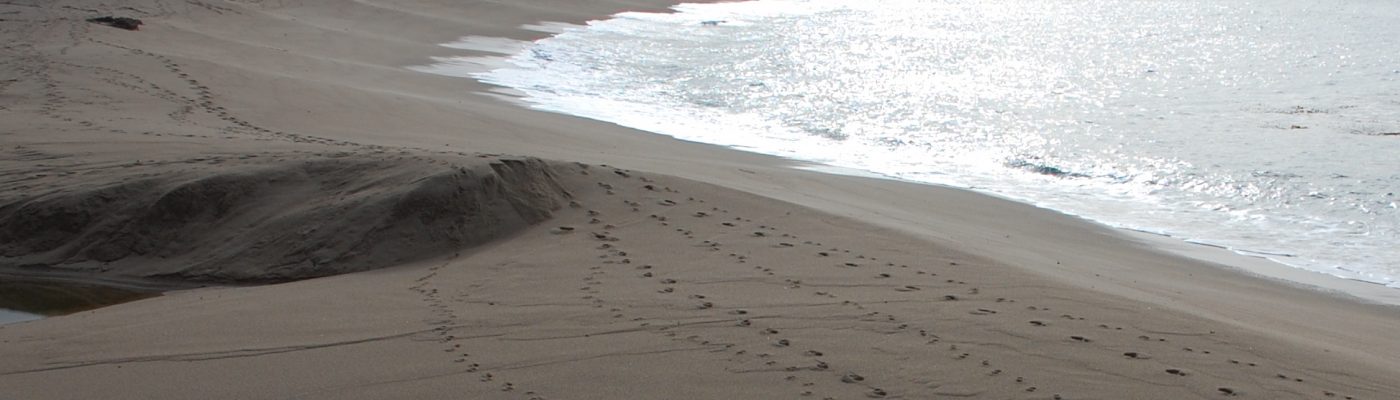
                Lots of people taught me how to drive. Most of the time I learned in my mom’s automatic, but my brother kept offering his manual Jeep Wrangler. I kept putting it off. One day we went off to the beach, climbed on rocks, chased some waves (we could catch them, but then they’d catch us), and walked, tired, back to the Wrangler.
                “You should drive,” he said.
                “Oh, not today,” I said, which was a variation of what I’d been saying for three months.
                “Come on. The first roads are quiet, anyway.”
                “Thanks, but I’m tired.”
                And then we sank our feet down into the ground we weren’t going to give up.
                “You’re driving us home.” 
bsp;  “You don’t get to decide what I do.” 
                He tossed me the keys.
                I didn’t catch them.
                All I could see was someone trying to make me do something I’d decided not to do. I wasn’t going to let that happen. At the time I had no idea what my brother was seeing. Didn’t he know it was my choice?
                We sat on the top of the bluffs for a long time. I’d decided I wasn’t going to lose. I’m grateful that he saw past the lose/win stupidity, because after it got dark he picked up the keys, looked at me, and said–I can still remember his anger, his hurt, and the respect that stayed wrapped around both of them–
                “You need to learn when someone’s trying to screw you, and when someone’s trying to help.”
                Then he drove us home.
                I think I’ve done the same thing, again and again, just like Bilbo in The Fellowship of the Ring. Gandalf is pushing Bilbo to give up the golden ring, and Bilbo can take that and twist Gandalf into a thief. But he’s not a thief. He’s a friend. 
                I wish I’d seen my brother, not some make believe ogre forcing me to (horror of horrors) learn. I think it’s inevitable to miss some of what’s offered, to misread some of what’s said, but I want to trust a little more. I want to dig in my heels a little less. That way I can appreciate, and accept, more of the help that’s offered.
                Oh: and I want to drive my brother back to the beach.

209: “A Myth That Tells Them” (James Welch)

                “Let glory go the way of all sad things.
                Children need a myth that tells them be alive.”
                -James Welch, ”Blackfeet, Blood and Piegan Hunters”

                Years and years ago, when I was banging my head against some story idea, my mom came into the room and said, “Stop making yourself miserable.”
                “I don’t mind being miserable if it makes better art,” said the pretentious, idealistic, twisted up thirteen-year-old me.
                “It doesn’t,” she said. “And even if it did, don’t choose to be that.”
                Then she walked away.
                That moment came back to me recently, because I lived it again from the other side. My ex-student and good friend played the role of a (probably much more self-aware) me. We were talking about a powerful piece he’d just finished, in which he criticized the way we blind ourselves by only seeing what we expect. We were talking about our literary influences. He mentioned one writer he looked up to who came off as a “total asshole” on the page.
                “Well, follow his writing, then, but not his life,” I said.
                He said something like, “I don’t mind being the asshole critic if it helps us see what’s wrong.”
                He’s more self aware than I was, so he said it as a joke, and a little bit later he circled back uncomfortably. But it’s an image our culture has, just like the Jock and the Tech Bro: the Tortured Artist, turning pain into life. And, okay, I know some people who have transformed their own hurt into compassion by having it teach them what it’s like to hurt, and inspire them to help others. That’s wonderful magic. And, okay, art gives us a garden where we can grow thorns and flowers and fruits and poisons, and wonder about what to do with them all. But lately I’ve been trying to work out of love and hope, not hate and fear, and the work is better. My friend’s writing was angry because he cares, but if he chooses the anger over the caring, he’ll end up with a torch but no beacon to burn, no hearth to sit at. He doesn’t want to be an asshole critic, just like I didn’t want to be miserable. We were just children, listening to myths.
                Where are the myths about two friends who are good friends, without killing anything? The myths about doing the dishes, and installing a grey water system to feed your garden? The myths about listening, about going to work and coming back from work to something else? The myths about quietly, deeply hoping, and following that hope through the little moments of every day?
                “Children need a myth that tells them be alive.”

208: “Arguing With A Dead Man” (Ian McEwan)

                “Arguing with a dead man in a lavatory is a claustrophobic experience.”
                -Ian McEwan, Sweet Tooth

                A thought has content, but it also pulls me toward a particular experience of the world. An argument can be flawed or logical, it can have steps that hold together or fall apart, but there’s also the experience of walking that argument’s staircase. Holding up an empty toilet paper tube might be a convincing argument that there’s no more toilet paper, but the content there–no more paper–is different than the experience of believing it, and of wondering what to do now that it’s true. Arguments move us to somewhere: after that, we experience what it’s like to be there.
                McEwan’s heroine, Serena, had an affair with an older man who groomed her for a career in the MI5 of the 1970s. After the affair ends badly, and the man dies of cancer, and Serena’s risen a few rungs in MI5, she learns that this man might have passed important secrets to the Russians. Might have–she can’t be sure, and he’s not here to ask. She can imagine the justifications he might offer about why he did, if he did, and she can wonder through all sorts of different possibilities. She can’t figure anything out. Alone in the lavatory, with no new knowledge to consider, she’s stuck trying to fill in the puzzle that once went around the single piece she holds.
                Sometimes, I think, we need to follow the thoughts that hurt us. That’s how we confront our prejudices, our biases; if we just turn those thoughts off, then we risk making our mistakes more comfortable. We risk making our mistakes the kind of place where we can stay. But there are other times when I find myself locked in the little stall of a lavatory, arguing over the same one point, trapped in the same small space. Maybe I’m not “wrong” in those instances. It’s not that what I’m thinking couldn’t be true, and it’s not that the ideas I’m turning over might not be important; it’s that the action of turning those thoughts is hurting me without helping me move forward. When that happens, I want to realize that I’m the one who closed the door. I chose this place, this question. I don’t need to keep arguing with a dead man. If the walls here don’t give me space to move, this might not be a place I want to stay.

207: “His Share Of The Work” (Jack London)

                “It was the cherished belief of each that he did more than his share of the work.” -Jack London, The Call of the Wild

                It’s a lot easier to see the work I’m doing than the work you’re doing. When you washed the dishes, I just noticed that the counters were empty; when I did them, I noticed all the sticky burnt bits on the frying pan, and how oily the water got, and the scrub scrub scrub of the sponge. When you took the car to the mechanic, I saw the check engine light wasn’t on anymore. When I went, I struggled through my confusion, my fatigue after everything else that day, my worry about getting cheated. I see my efforts inside and how they end up outside, but I only see your results.
                There are some partnerships where one person really is working much more than the other. I’m not sure what to say about those. There are others where both of us are working, or trying to, although maybe the stuff doesn’t seem to be getting done, and we’re both sure that we’re working harder. How do we get out of that trap?
                Well, there are lots of ways, I suppose. I can be more aware of others’ efforts. I can imagine, every now and then, as well as I can, what it took for someone else to do this. I can appreciate all the ways in which I’m supported. I can, because London already brought it up, think about love. London’s characters “cherish” their belief: they not only think that they’re doing more, they’re in love with that thought. When I do that, it makes me the victim and the wounded hero and the unappreciated genius and the great provider all at once. A great gig, right? Except it isn’t, because it makes you into someone who victimizes and wounds and takes without giving, which in turn prevents me from appreciating (or maybe even receiving) all that you offer. 
                I can cast us in those roles, but I don’t want to. There’s so much to cherish (myself; you; the work itself; the world we’re sharing; what I’m working for) once I stop repeating, stop loving the idea that I’m doing more than I should have to. There are so many other things to love. There’s so much more meaning in what I do. And there are so many other people helping, too.

206: “Proof Of Your Existence” (Wright & Fridlund)

“Proof
of Your existence? There is nothing
but.” -Franz Wright

“All anyone ever wants, I thought–feeling wretched and invisible at once–is someone to verify you’re still here.” -Emily Fridlund, “Here, Still”

                Do most of us sometimes feel “wretched and invisible,” or is that just me and Fridlund’s character? Somehow I’m guessing it’s most of us, but then again, I also keep guessing that everyone would rather be walking through a creek than a mall, and the proof doesn’t seem to be on my side. So I’m not sure.
                In any case, I’ve been where Fridlund describes–I’ve felt unpinned from the world, not sure if I’m really here or where (what?) the here is that I’m supposed to be. It’s like slowly becoming an emotional, intellectual ghost and drifting, not through the floor, but into the infinite space between things. When that happens I’ve wanted someone–almost anyone, really–to come back and pin me to the moment, a moth to a card, with a smile or a yell or a “yes.” In the worst moments I’d settle for hurting someone. At least that would show I was there.
                Proof of Your existence? There is nothing but. The first time I heard that, I heard it out loud, so I missed the capital Y. That meant it was about you, or me. About any of us. And I thought, huh. The rock, and the sky, and the ache of my sore leg; the summer heat and the sound of tires on the street outside. Maybe all that really is proof.
                So why, with all of that, do I still sometimes feel like I need verification that I’m still here? Maybe there are two different kinds of proof. When I get really me insistent, when I get worried I’ve drifted off, I want verification that focuses on me. I want to touch something and see it move. I want to say something and know its heard. But when I’m quieter, when I’ve been listening to Wright’s poetry out on the porch for an hour or two, than it’s different. Everything is proof: a bottlecap, a conversation across the street, the ground beneath me. I suppose the first kind of proof works by you listening to me, and the second works by me listening. The first is me splashing the water until I know I have a hand. The second is knowing I’m here, not because I can feel where my body starts or ends, but because I can feel the water. The first is about being witnessed. The second is about being a witness. As far as I can tell, the second’s always closer to where I’m standing, because it’s a movement that happens entirely inside: it’s like being a child in the house where I live, and putting my hand against the window that leads outside. I might not be able to reach through the glass, but I can feel everything going by.

205: “Wolves Would Swallow Me Up” (Burnett & Klassen)

“When I was outside, I was afraid every day wolves would swallow me up. In here, that’s no worry.”
                -Mac Burnett & Jon Klassen,
The Wolf, The Duck & The Mouse

                One of the great things about my niece is that, after she calls for me rather early in the morning, she suggests that I might want to read a book. And while I might think some silly things like “It’s too early,” I realize, a few pages into The Wolf, The Duck & The Mouse, that I really would like to. Thank you.
                The book starts with the mouse, who is quickly swallowed up by the wolf. Inside the mouse meets the goose, who’s still in bed: “I may have been swallowed,” says the goose, “But I have no intention of being eaten.” When the goose learns it’s daytime outside, he gets up, and invites the mouse to have breakfast. And so they go about making good lives in the wolf’s belly.
                When what I’m afraid of actually happens, when its jaws go wide and swallow me down, it’s usually not as bad as my continual fear was at the beginning. One of my early examples of this was in kayaking: the idea of flipping over in the middle of a rapid was terrifying, until I did it. Then I rolled up, and it wasn’t so bad. Lying in bed before an important day, I can spin out of control thinking about how horrible it’ll be if I’m not rested for tomorrow; tomorrow, when I’m not rested, I go about doing what I can. The idea of getting rejected from a program I really, really want is far more crushing than the rejection itself. Years ago, my friend actually recommended all this as an exercise: when you’re scared, think what you’re scared of; imagine it happening; what then? 
                I don’t want to dodge all my fears–many of them are useful. I know people who simply will not text and drive because they’re scared of killing someone. I’d like to hold onto that fear. I also don’t want to presume that this works for all fears: my examples deal with relatively tame threats. Does the same thing happen with something bigger? I don’t know. I’m thinking about it.
                We’ve made fear, made failure, into a nightmare bogeyman waiting behind every tree, and now we go running ahead of him. Burnett’s goose says that, once the wolf catches us, once we build a bed and a breakfast table in the pit of his stomach, we’ll realize that where we are is a place where we can go on living. There might even be time for toast, or a before-breakfast book with my niece.

204: “Grazes Dreams” (James Tate)

                “But poetry says things that nothing else can. It snares the edges of the unspeakable. It grazes dreams. It stands with feet in several worlds. It says two or three things at once, and then denies them all in favor of silence.”
                -James Tate, in his introduction to James Welch’s Riding the Earthboy 40

                Over the last few years, poetry has become my favorite thing to teach. I think everyone can write a poem. That’s not because it’s easier than prose, or because it’s harder, or anything about the difficulty. Perhaps its because poetry, in the end, is grounded in silence, and however loud we think we are or pretend to be, we’ve all been silent.
                Whenever I start with a new group of students, someone asks, “But what is poetry?” Sometimes I ask it just to get ahead of the question, but the truth is, I’m always a little “Oh boy…” when it comes up. Not “Oh boy!” like excited for the first snow, but “oh boy…” like when you come back at 11 pm and realize you put your only pair of sheets in the washer that afternoon, but not the dryer. You’ll have to do something, and whatever you do it’ll be okay, but it’s not going to be great and (if you’re me) it’s not going to be the last time you do this.
                Back at Amherst, when someone gave The Question to Professor David Sofield, he opened our book and pointed around the words: “This stuff,” he said. “The blank space. That’s what makes it a poem.” I thought he was joking, but reading Tate, Sofield’s answer comes back to me. It’s the blank space. It’s the margin around a moment. It’s the room we sit in, listening. Last semester, when my students kept pushing, I eventually told them: “You know when you’re sitting in the cafeteria, and you’re talking about some BS TV show or a piece of gossip, and you couldn’t care less about it, but you keep saying it all the same? Poetry is not that.”
                Everyone can write a poem. These days, I love trying to open that space for someone to try. Try to say the things you can’t. Try to graze a dream, which could mean brushing a finger against it, and could also mean bending down your head and tasting it, intent and careful like this morning’s deer. Notice that there are two or three things you mean, and once you’ve done that, notice the silence. Sometimes it’s the silence that has something to say. Whenever I sit down a moment, whenever I make a little space (instead of trying to or pretending to), that silence is there.

203: “What’ll You Fall For?” (Miranda & Albert)

                “If you stand for nothing, Burr, what’ll you fall for?”
                -Lin-Manuel Miranda, Hamilton

                “That was his thing, I’d noticed. Doing everything with an ironic twist. Like he was going to laugh at himself before anyone else could.” -Melissa Albert, The Hazel Wood

                When I first heard Miranda’s line, I heard “fall” like “die,” as in “remember the fallen.” Hamilton was asking, “If you don’t believe in anything, what’ll you die for?” Then again, we use that little word to mean all sorts of things.
                As a high school teacher–and okay, as someone walking around today–I see a lot of people who refuse to come out and believe in something. I can understand why. Once I believe in something, I’ve shown you how to mock me.  Once I tell you what’s important to me (the thinking goes, subconsciously or otherwise) I’ve shown you how to hurt me. And maybe that’s true.
                I’ve let that “ironic twist” pull me away from all sorts of things. It’s the reason why I still “won’t dance,” and not in Sinatra’s super cool dancy way. I’ve been too worried to start learning. It seemed so important, and I felt so bad at it. (I finally talked to a dance teacher: if I need to look like a clumsy goat in rollerskates, then I need to look like a clumsy goat it rollerskates, because it’s long past time to try). Growing up, watching my big brother, I ran into something similar with basketball and kayaking and plenty of other things–he seemed so much better, and I didn’t see how I could follow him. (Luckily for me, he worked really, really hard to teach me  and bring me along. He still does). All this is nothing new: go to almost any classroom, and you’ll see someone not caring because they don’t want to end up a fool. Watch yourself for a while. Maybe you’ll see the same thing.
                “If you stand for nothing, Burr, what’ll you fall for?”
                That little word can mean so many things. Heroes “fall” while fighting, and we’re all worried about “falling” for someone’s trick, and Lucifer’s existence changed after “the fall,” but there’s another meaning. I can fall for something. I can fall for someone. Against the odds and without that much explanation, that something or someone suddenly comes to mean the world to me, and to bring me more fully into the world, because I’m giving my heart. I don’t know if that’s what Miranda meant, but these days, when I listen to Hamilton, that’s what I hear him asking.
                ‘If you’re so scared of becoming a fool–if you’re so scared of falling for a trick–then how will you ever fall in love?’

202: “Which of Them Would Win” (Theodora Goss)

                “I wonder which of them would win, in a contest for worst father? Frankenstein, Rappaccini, Jekyll, or Moreau?”
                -Theodora Goss, The Strange Case of the Alchemist’s Daughter

                When I was thirteen I wrote what I was pretty sure was my magnum opus. Well, my parvum opus, maybe—it was fourteen pages long. But it seemed like the first step of something much longer, and it was cool. So cool. Mark, the main character, was so cool. I showed it to my friend. She read it and said, “That’s sad.”
                I was confused.
                Mark was so cool. In the beginning he was walking through a city, and then there was this knife fight, and he was all like, “Yeah, knife fight, I can handle that,” except he didn’t even say that, he didn’t say anything, he just saved this person and then walked away and sterilized the wound on his ribs with whiskey before drinking some. Of the whiskey, not the wound or the blood or anything. I didn’t like vampires, even then. I pointed out all that to my friend, in case she had missed the cool, but she’d seen everything I pointed to.
                “It’s sad,” she repeated. “He’s so—trapped. So small. There’s so much more he could be.”
                And, of course, she was right. Mark was my James Bond knock-off, my tough-guy cliché of insecurity and emotional confusion swept away by a good jawline, a good leather jacket, and the promise of nothing—no vulnerability, no hurt, no heart—inside. Luckily I really liked and respected my friend, so I grumbled a bit, and held on to my Mark. And started looking past him.
                There’s a Thing where villains often end up heroes. I think there’s something good in that—in a world of strict expectations and forced perspectives, villains can give us the why-nots, the could-bes, the shadow. A sterilized garden doesn’t grow much. Then there are heroes who end up being villains. I’ve talked with boys who idolize DiCaprio’s character in The Wolf of Wall Street. And why not? They look at him, and they see smart, handsome, successful, wealthy—everything you’re supposed to be. He does whatever he wants. Isn’t that what a good life means?
                Well, no. It’s not. But when we have heroes who say it is, we start to listen. Look around at all the heroes (or villains) who seem so cool, so powerful and mysterious and passionate, and who don’t have any thought for the people—the friends, the spouses, the children—around them. Where are the others? Where’s the ubermensch who’s great, not because of what he takes, but because of what he gives and shares?
                In the original stories, Sherlock Holmes (who appears in Goss’s book, too) goes through life saving the day and stepping on the people around him. He gets away with it because he’s brilliant. His disregard for others’ emotions is almost portrayed as part of his brilliance. Goss’s Holmes sees deeply, too, but he’s not as invincible, and he cares when he’s hurt someone. I like that. I suppose I want to read more stories named for people who, instead of twisting the world for themselves, tend to it for their children.