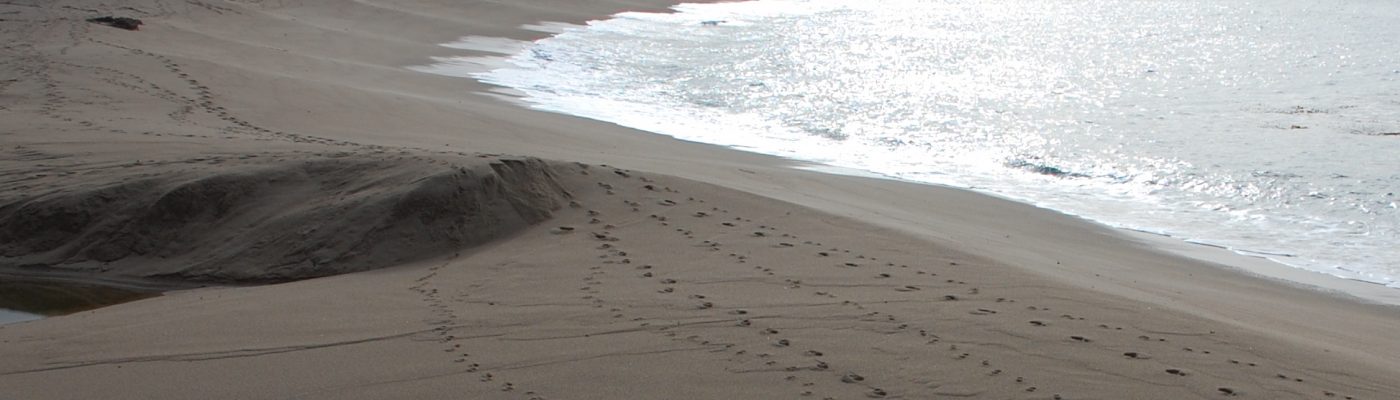
534: “Much Together” (D’Arcy McNickle)

                “Even then, it seemed, they said but little to each other, yet nothing went unsaid that needed saying.
                In those days they were much together.”
                -D’Arcy McNickle The Surrounded

                My sibling’s visiting for a week. In the kitchen just now, actually, baking bread. Ten minutes ago we were lounging on the couch together. Earlier today we were walking beneath sycamores. (I love sycamores: the patterned bark, the broad leaves, the nobby branches like fairytale walking sticks or heretale hands waving hello). I think I feel a pressure, when I get to see a loved one again after a long time apart, to try and say everything. To talk it all out: the catching up, the reorienting, the worrying, hoping, planning, sharing. And I really do like talking. I am, I think most of my loved ones would agree, a talker. But I’ve also been sitting—or walking—with the limitations of all that saying. The saying (for me) can be a way of trying to undo the distance we also live in, our lives growing in different places. It works in some ways, and in some ways it doesn’t. More than words, what I want is our connections. And when we also live far apart, when we are together, I want that time together. Here is still a distance, not undone but not all-doing. And here’s our closeness. And here are these walks beneath the sycamores, shared steps, shared stillnesses. We are much together.

527: “Rain opens us” (Joy Harjo)

“Rain opens us, like flowers, or earth that has been thirsty for more than a season.
We stop all of our talking, quit thinking, or blowing sax to drink the mystery.
We listen to the breathing beneath our breathing.
This is how the rain became rain, how we became human.”
                -Joy Harjo, from “It’s Raining in Honolulu,” which I first saw quoted in Daniel Heath Justice’s Why Indigenous Literatures Matter

                My friends, I was writing a different Uproar post—perhaps for next week–when the wind shifted in the window and then it was raining. Clouds’ fingers dancing on the deck. Then I was outside, too, surprised and opened by how thick the water fell. Then I was crouching beneath a little tree in my backyard, making sure the rain barrel was closed, water stitching down around us, earth into sky, now into before into after. Life into life.
                Rain opens us, like flowers.
                There’s been a drought here. The plants lying down, one kind after another, beneath the dry heat. Until I see wilted ground cover like ragged carpet over hard dirt. Now I’m back inside, skin still slicked, long enough to write down that I think the plant stems will lift back up with this. Like I feel myself lifting.
                We listen to the breathing beneath our breathing.
                Long enough, and no longer. And back outside to feel the water soaking down, lavish, luscious, alive.
                This is how the rain became rain, how we became human.

525: “The Dark Gulp of the Sea” (Emily Tesh)

                “So it came now, the dark gulp of the sea, roaring through the Wood.” -Emily Tesh, Drowned Country, p. 129

                Emily Tesh’s Drowned Country walks, in part, through an ocean that was once forest before the waters flooded over. Through the twists and turns of the book’s magic, a knot of friends travel back and forth through time: from the ocean bluffs they were born near to the Woods that lived there before the ocean washed over the land, and back again.
                In Illinois I live on earth that was once oceanfloor, and before that was forestfloor. Earth that knew glaciers and their long melting. I remember one of my first walks when I moved here, staring up at the clouds, trying to recognize the wonderful beauty of this particular place. The closest I could get was a scrap of song: the sky here’s like an ocean.
                I can’t travel like Tesh’s characters. But outside today, I wonder if we all walk the same grand changes. Forested bluffs worn away to oceans. I’ve been in those rolling waves. Lakes filled in with silt till they’re meadows. I’ve disappeared into those shallows. In my short lifespan it can be hard for me to see the currents of these changes. The Woods (Tesh says) see them differently. So today I’m watching the trees, thinking about what they might see, wondering what I can feel of time and earth and sky painting together.

491: “At night I would lie in bed” (Sue Monk Kidd)

                “At night I would lie in bed and watch the show, how bees squeezed through the cracks of my bedroom wall and flew circles around the room…”
-Sue Monk Kidd, The Secret Life of Bees

                                One way to start this post is by trying to remember how long ago I first read these words. It was more than half my life ago, I’m pretty sure, which isn’t long if you measure it by many things—my grandma’s lifetime, or the forests I went walking through today—but it can seem pretty long to me. 
                Another way to start is to say I love that moment between (and beyond?) waking and sleeping. The one where Lily (in the book) watches bees. The one where I, at nine or ten, laid awake in the mountain cabin my grandpa built, watching the fox in the woodgrain. I still look at that face sometimes. And the place where I, last night, lay awake with my partner listening to the rain and hearing one of her siblings moving away down inside the house as we all visit for the holidays. And the place where, at seven or eight, the night would open into flowers and talking animals and other figures from the stories my parents had been reading me. (And nightmares and teeth, sometimes). And the place where, at nineteen or twenty, I thought about all the new people I’d met,  all the different ways they walked through the world. 
                I think I’m saying there’s an openness in that lying awake in bed that lets things come together. The buzzing bees. A sibling’s footsteps. A lifetime’s memories. My partner and I are out in Washington State, visiting family. Yesterday we were with her parents and siblings. Today we were with my mom and siblings. The scheduling can feel like a lot, a kind of family crossword. It can also feel easy, sweet, open, full. I pulled The Secret Life of Bees off my sister-in-law’s childhood bookshelf. In waking and falling toward sleep I wonder if we feel some of the ways lives swirl and weave.

487: “The Syrup” & The Sun (Robin Wall Kimmerer)

                “The syrup we pour over pancakes on a winter morning is summer sunshine flowing in golden streams to pool on our plates.” -Robin Wall Kimmerer, Braiding Sweetgrass, p. 86

                It’s gotten cold in Illinois. My love and I covered our little garden of greens, the kale leaves still vibrant (the spinach a little less so, though still lush after our first two frosts), and we’ve started staying warm with our fireplace. That means I’m splitting firewood again like I remember doing as a teen.
                I love how splitting firewood and planting kale, spinach, and arugula (I can’t leave out those deliciously spicy friends) brings me back to a being-ness and moving-ness of the world. It’s different, for me, when I move the thermostat and a distant hum indicates a furnace that I don’t know how to fix or feed has started. When I started imagining writing this post, I was worried I didn’t have a new thought. Not really. And I don’t think I have, not really, but this isn’t a thought-post. Syrup is summer sunshine. Kimmerer’s line comes from a chapter on making maple syrup. The heat that moves around me is always something: a dance that stepped along before (as gas or electricity or a tree’s reaching branches) and will keep stepping along (out through the front door, and in through me, too, come to think of it). This is a post about being with that being-ness. About recognizing the ways my habits pull me away from the roots of kale and the grain of wood and the bugs, I don’t know their name, who’ve been nibbling from the same plants I’m nibbling. About relishing the practices that bring me back. Whsh. Thunk. I wish I could end this with the sound of an axe landing, or with the touch of dirt, cool and close.

485: “Okay bring it in” (Jinkx Monsoon)

                “Okay. Okay bring it in.”
                -Jinkx Monsoon, in a quick aside while singing “One Day More” from Les Misérables

                More than a year ago, a friend and I tried to follow a creek that runs through the neighborhoods where we lived. Some of the creek’s beneath housing developments just now, pushed down into what I assume are cement pipes. Other portions are landscaped, curated: that’s how it is near the Engineering Quad on campus. Pretty walkways and bridges. Other portions of the creek are confined in these deep channels, and we put our heads over the fences, looking down. As we followed the current we kept running into roads with no walkways, into paved places where you couldn’t tell where the creek was, into no trespassing signs from the National Guard. It would’ve been fun to follow the creek past city limits, but we turned back at those signs.
                I love when singers spin around the genre for a song lots of people know. “Hot’n’cold” as polka. “Defying Gravity” as funk. I love when someone tries out a different kind of singing, and we get to listen, cheering them on. I think it’s partly because Jinkz Monsoon is so playfully inhabiting different genres, different performances, of being human: she’s playing back into the steps and hips rolls and shoulder wiggles that are supposed to be “him” or “her,” supposed to define the social persona in which someone walks along as a barkeep or a detective or a lover. It reminds me a little of the creek pushed into so many shapes by the construction projects of Urbana, IL. And  the water flowing along, down from clouds, out into prairies, not held by our shapes (not really, not forever). Dancing. I hope I’ll get to go back and continue that walk.

458: “There Will Be A Name” (Marcelo Hernandez Castillo)

                “Because the bird flew before / there was a word / for flight / years from now / there will be a name / for what you and I are doing.”
                -Marcelo Hernandez Castillo, from “Cenzóntle,” Queer Poets of Color

                The birds have been singing in my neighborhood, and I love it. And I know, yes, that’s the kind of thing that people say is cliché—the birds are singing—but it’s delightful to let myself be delighted with all these things that are sometimes called clichés.
                Marcelo Hernandez Castillo helps me here. I love how Castillo (and poetry, and love, and Castillo’s loving poetry) plays back and forth with the meaning of things, and for me, the rhythm of that play washes me at least two different ways. There is the idea I read: how there was flight before the word “flight,” how what we do will become a linguistic possibility because we’ve done it. What you and I are doing becomes a word, a thing we can say. We name we’ve taken up to live with.
                And another way. I can say “the birds are singing,” that old cliché, but the cliché isn’t the specific birds who are right now outside my window. The birds who might be the same ones who sang to my friend and I yesterday evening, as we lay in the grass outside. Those good neighbors. Or maybe they’re new birds, new neighbors. And though I say “the grass outside” don’t think it was only grass, or don’t think grass is simple (a mistake I sometimes make), because as we lay there we noticed so many different leaves, so many different shades of green, so many growing joys in what I could simply call a “field.” There is so much more abundance, so much more life, than my simple namings. And while there will be a name for what we do, another side of that same thought, for me, is that the name for what we do will be part of our doing—maybe a celebration of it, or a reminder, or an invitation—without being all of our doing. Without being the birds or the songs that they’re singing. Which is lovely, isn’t it?

444: “Walk to the well” (Rumi)

“Walk to the well. 
Turn as the earth and the moon turn,
circling what they love.
Whatever circles comes from the center.”
                -Rumi, translated by Coleman Barks, The Essential Rumi p. 279

                This evening I had the wonderful chance to walk with my friend Roger. That’s part of how we became friends: long rambling walks, through the woods of Amherst, MA, to the ponds where little lives glowed at the kiss where earth met water, to the hill where stars scattered, and back beneath the trees, limbs creaking. Shadows alive. We became friends on long walks and in conversations that felt like long walks, circling through hopes and dreams, ideas and curiosities, and back to shared silence. Pauses that felt like long drinks of cool water. Circling back to each other. 
                Today we walked with each other through a phone call. Less good? Perhaps. I certainly wish we could walk together in person more often. Like so many of my friends, we’ve moved away from each other with jobs and degrees and all the steps that felt necessary. But tonight, sharing voices, we felt close again. And instead of saying we moved away from each other, I thought, we’re walking to the well. Circling what we love. I think I love walking because of its stillness and its movement. Running, or driving, or riding a bike—I feel the rush, the excitement. And stretched out on the grass I feel at ease. Although, in another way, that’s not true at all: in the middle of running I sometimes find a moment where all there is is breath, stillness, and in lying on the grass I sometimes feel roots digging, sun pouring down, blood circling. 
                Walking with a friend has a way of bringing me back to the kind of center that can stretch all the miles from here to there, that can live inside a phone call. I’m so grateful, and so glad. Walking to the well, and sometimes walking is its own drink of cool water.