503: “Evade and Avoid” (Alexis Pauline Gumbs)

                “What I know is that I love you. Even if you are not interested in being followed. Even if you show up in disguises. Even if I’m not the one who should know you or name you or classify you at all. And I celebrate your right to evade and avoid me. I celebrate your journey however deep, however long. I respect you as so much bigger than my own understanding. And me too. I don’t have to be available to be eligible for breath.”
                -Alexis Pauline Gumbs, Undrowned: Black Feminist Lessons from Marine Mammals, p. 92

                For a while now (a year? More?) I’ve been wondering where it is that Alexis Pauline Gumbs writes about loving whales, even when they choose to stay out of sight, beneath the surface, far from her. And then today in looking through Undrowned for a different section these lines swam past me. And I thought yes. I felt yes. 
                I think I felt yes because so much of my training, my learning, my community-tending is about learning things. Seeing things. Being introduced to people. But just yesterday a dear friend talked about the peace and joy and life that comes from keeping their distance from certain people that they don’t want to be close to, and I felt, yes.
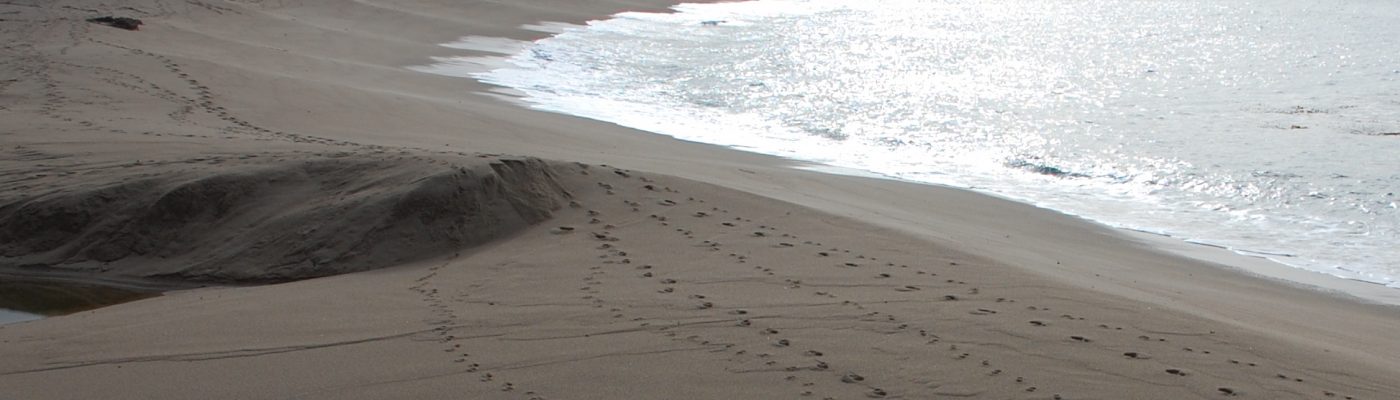
                I think I felt yes because I’ve been feeling the ocean of the sky blow with lightning and thunder out here in the plains. A little while I tried to imagine how big a storm is. Imagine prairie and forest and hill until it stretched out that far. And then I remembered Undrowned and realized to feel a storm I could step outside. Hear one little breath of blowing, and see the towering clouds washed up, deep beyond my seeing. 
                I think I felt yes because I want more learning and organizing that’s about respecting and celebrating the distances and disguises and evasions that breathing creatures choose.

500: “Welcome Comfort” (Becky Chambers)

                “And to that end, welcome comfort, for without it, you cannot stay strong.”
                -Becky Chambers, A Prayer for the Crown-Shy

                One of the fun parts about this project is that people start sharing their favorite quotes with me.
                Years ago my friend and I sat talking about kids, and how we both thought that no one really knows a kid’s gender until they’re old enough to start saying, “This is me.” I said that meant I didn’t know what to do. What to say. My friend, trans and mid transition, started telling me about cool picture books with gender diverse kids. We talked about one (I can’t find it now! Someone tell me the name!) with a kid who’s picking out all sorts of different outfits—shorts one day, a dress another, a dragon costume another. If the kid feels themself in the book, they can say, I’m like that. If not it’s still a fun story about fun people.
                Lately, when people tell me about the art they’re loving, I’ve been thinking about that book. About how so many of us are looking around for the yes or the maybe or the bright that helps us share what we’re experiencing, and so come closer in the ways we want to.
                My younger sibling called me this morning. They asked, “At what point do you quit?” They’ve been planning a certain path for the next few years, and they’re not sure anymore if their plan feels livable. They called again tonight, just back from running around in the rain with some friends. They sounded a lot happier. We chatted. I told them I was struggling with an uproar draft, and they gave me Becky Chambers’ quote. I wondered if this welcome, friendly, relationship-woven comfort was something they were reaching for, given where they were. In the picture book, in the way of picture books, looking for what we need, for what feels right, plays out in something colorful and touchable. All those clothes. In my life, that looking often plays out with people and words and art. Tired and snuggled next to my partner, because it’s still chilly where we love, I wondered if that welcome, friendly, relation-woven comfort was something we’ve also been needing. It’s wonderful how our reaching for what makes us possible can help make our loved ones possible, too.

498: “Long-Distance Love” (Ishita Dharap)

                “The Long-Distance Love-Letters program has been rescheduled to take place on Sat, February 22, 2 pm, at Krannert Art Museum.” -Ishita Dharap, in an email sent out this afternoon

                I messaged my dear friend Ishita on December 2nd, inviting her to come over and enjoy dinner and a cozy fire. She was in India with her family, she said, and she sent a picture of a truly delicious dinner that I would’ve loved to share. I met her family once. We talked about joy and rest and becoming an interwoven family as leaves rustled overhead and the stars came out in a deepening sky.
                Ishita and I messaged each other again on January 3rd, looking for a moment to catch up, but we wouldn’t be back in the same town until January 12th. Then things were busy. Now it’s mid February. Whenever we catch up, my friend, it won’t be soon enough—and at the same time, all this—and her email today—has me thinking about how the joy and curiosity and support of our friendship isn’t something put off to that scheduled moment where we can see each other in the craziness of our current political moment. That joy and curiosity and support is already woven all through: long distance love, sweet and playful and sad as we say hello from close and far away.
        I haven’t been to Ishita’s Long Distance Love-Letters museum program. Not yet. But I’ve seen her write about it (in a book and a journal article), I’ve talked with her about it, and in imagining it I’ve felt it. Maybe that’s because I’m thousands of miles away from so many of the people I love. Maybe that’s because the stories I often hear told about “long distance” are about missing, about absence. Ishita’s work makes me think back through all the ways that missing and remembering are kinds of touching and playing and learning and being together. It helps me feel that so many of my beloved absences are presences, day after day, in so many ways.

493: The Fox Maidens (Robin Ha)

                “When I first conceived of this graphic novel about Gumiho, I thought it would be a fun, action-packed, fantastical thriller, full of cool scenes for me to draw. Now, I realize that what I’ve actually made is a book about generational trauma.” -Robin Ha, author’s note to The Fox Maidens

                bell hooks writes (in Teaching to Transgress) about going to education in the hopes of being healed. Sitting with that and with Robin Ha, I realize something similar is one of my favorite magics of fiction. We can set off writing, reading, imagining on our way to excitement: toward fantastical thrillers and wondrous adventures and cool scenes and clever lines. And carried along by the excitement of snows and wintry peaks, of magic and holding fire, we can find families, friends, loves. We can stumble openly into the hurts we are and heal, sometimes alone, sometimes together.
                There are so many stories that heal me. Lately I think I’ve slipped back toward thinking about stories largely as entertainment (which they can be), or about philosophical presentations of what the world is and should be (which they can be). Reading Robin Ha, I feel story as red skin, a burn, tender and regenerating. So much is burning, scorching so many of us. Here in The Fox Maidens is a healing breath we breathe together.

492: “The Word ‘We'” (Divya Srinivasan)

                “And Little Owl thought how he loved the word ‘we.’”
                -Divya Srinivasan, Little Owl’s Love

                My partner and I just got back home, pulling into our shadowed driveway and waking up our sleepy chilly house, after a long visit out to family in Washington State. We solved puzzles with our grandpa and great aunt. We cooked with both of our moms, and made pot holders with one of them and with our nieces. We played games with our siblings. Different collections of family went out for walks to a frog pond, and walks beneath evergreens, and somewhere along the way I started making friends with a cedar tree. A small one, probably a little younger than I am. It chuckles nighttime thoughts in nighttime whisperings.
                And oh yes, we read Divya Srinivasan’s Little Owl’s Love with our nieces. My partner read it first to the kiddos, and then found me on the couch and said, “You’d love this one,” And I did. That was the day before a whole family of raccoons went climbing along the fence, I think. So many of the stories I saw around me as I grew up told me that life was an individual thing. Remembering back through all these sweet collections of growing things, I do so love the word we.

491: “At night I would lie in bed” (Sue Monk Kidd)

                “At night I would lie in bed and watch the show, how bees squeezed through the cracks of my bedroom wall and flew circles around the room…”
-Sue Monk Kidd, The Secret Life of Bees

                                One way to start this post is by trying to remember how long ago I first read these words. It was more than half my life ago, I’m pretty sure, which isn’t long if you measure it by many things—my grandma’s lifetime, or the forests I went walking through today—but it can seem pretty long to me. 
                Another way to start is to say I love that moment between (and beyond?) waking and sleeping. The one where Lily (in the book) watches bees. The one where I, at nine or ten, laid awake in the mountain cabin my grandpa built, watching the fox in the woodgrain. I still look at that face sometimes. And the place where I, last night, lay awake with my partner listening to the rain and hearing one of her siblings moving away down inside the house as we all visit for the holidays. And the place where, at seven or eight, the night would open into flowers and talking animals and other figures from the stories my parents had been reading me. (And nightmares and teeth, sometimes). And the place where, at nineteen or twenty, I thought about all the new people I’d met,  all the different ways they walked through the world. 
                I think I’m saying there’s an openness in that lying awake in bed that lets things come together. The buzzing bees. A sibling’s footsteps. A lifetime’s memories. My partner and I are out in Washington State, visiting family. Yesterday we were with her parents and siblings. Today we were with my mom and siblings. The scheduling can feel like a lot, a kind of family crossword. It can also feel easy, sweet, open, full. I pulled The Secret Life of Bees off my sister-in-law’s childhood bookshelf. In waking and falling toward sleep I wonder if we feel some of the ways lives swirl and weave.

469: “Here In My Heart” (Moana)

“I will carry you here in my heart, you remind me
That come what may—I know the way—”
                –Moana

                Tomorrow I’m getting married!
                Tonight I just finished watching Moana with my partner, my siblings, my nieces, and my mom. This morning uncles and cousins and friends and family came together in a park to chat and meet and celebrate. (And eat delicious food). As one of my cousins was leaving, we paused in the parking lot, talking just a little more. I commented that when I moved away—to Massachusetts for college, at seventeen, then to India and Oklahoma and Illinois for work—I didn’t quite understand that moving meant all my people back here would be relationships I had to visit from far away. Of course I knew that. But I didn’t understand. 
                My cousin laughed and said something casual about here we were, though, chatting. Still connected.
                Tonight, one of my favorite parts of the movie is Moana running to hug her grandmother’s spirit. In lots of movies, the animators might depict the spirit as incorporeal—Moana’s hands could pass right through. A spirit could become a light to guide or talk but not to touch. Instead Moana throws herself forward and her grandmother’s spirit catches her. Holds her. The two leaning together. I love how real we are to each other, across whatever seas. I love how we love.

465: A “Photo of my Grandma” (Alexis Pauline Gumbs)

                “I found this yearbook photo of my grandma when she was sixteen yesterday and I can’t stop looking in her eyes. I am so grateful and proud to be in the lineage of this fierce black indigenous woman who would grow up to face her fear of flying, and all her other fears, participate in revolutions, found countless organizations, work in solidarity with women all over the world and speak destiny into her granddaughter’s ear. I love every version of you.💜”
                -Alexis Pauline Gumbs on her instagram

                I love every version of you.
                Going through boxes, today, finding photographs of my grandparents ten years younger than I am now, my great grandmother younger than I am now, I feel a kind of tickling glee. An excitement, almost mischievous, like sneaking downstairs at nine years old to taste the cookies I’m not supposed to eat and finding them something I can’t name. Ginger and cayenne pepper, maybe, and delicious. 
                And then I feel a kind of distance. All my grandparents have passed away. Looking into their eyes I wish I’d learned more from them. Sat more often with them. Stood or knelt at their elbow to work in the garden or play a game or plan a local meeting for one of the associations/clubs they joined/led. And I feel a kind of depth. It’s so easy, with instagram, with the press of a hustle culture and the fears of an expansion economy, to think that now is somehow more real than then. Today I held hair my great grandmother trimmed from my grandmother’s head. A little icky, honestly, and a lot sweet, and packed neatly in tissue paper. Today I held an award my grandparents’ won in a bridge tournament, and some of the cards they played with, and spare dice stored meticulously in my grandfather’s pill bottle. (My mom says I get my love of dice and card games from them). Today I stepped into the oceans of their wild, vibrant, chance, eclectic, chaotic lives. And those lives felt close. And those lives felt far away. And that everyday habit of pretending my life is somehow more real than theirs seemed so laughable. And Gumbs suggested one way through the distance and the closeness is gratitude and love for every version of you.