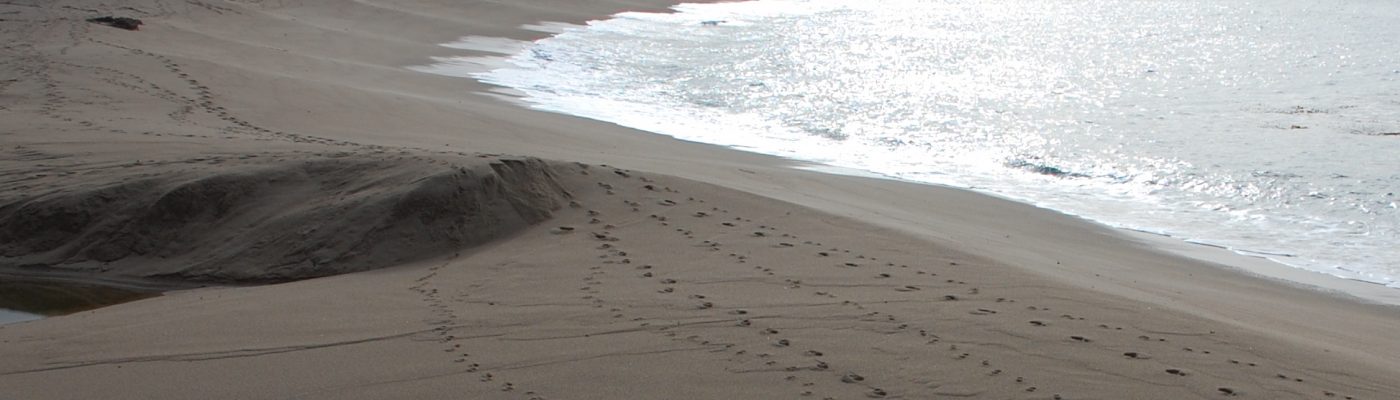
28: “Too Much With Us” (William Wordsworth)

        “The world is too much with us.” -William Wordsworth

        “The world is too much with us,” says Wordsworth: we are “out of tune” with its endless splendor, its muchness, its wave after wave of water and light and hilltop and life. Being out of tune, we often don’t hear the melody. Perhaps that’s precisely because it is “too much:” in a single flower, in a field of grass, in the grains of dust on my table, there is the touch, the color, the taste of more days than I’ll ever spend on any of them. How do we dance with all the endless forests that sway before the breeze?
        Wordsworth ends his poem by wishing that he could have been born an ancient mystic. Then he could look out and “glimpse” a sea-god rising from the water: then he could hear, at the edge of the wind, the sound of the ocean’s messenger calling the waves to rest with his conch-shell horn. The symbols come from Greek mythology, when the water was full of magic. Why shouldn’t it be full of magic now? Richard Feynman, the physicist, insists that simple questions followed deeply lead us beyond the realm of what anyone can explain. Within five feet of me, within the bacteria on my hand, within the patterns of light coming through the window, there is more that I don’t understand than that I do. That doesn’t mean we need to give up on understanding, or on the achievements of technology. “Technology” comes from the Greek tekhne, “craftsmanship:” the practical application of force and understanding. At the same time, tekhne can also mean art and weaving: it can mean taking strands from different places and wrapping them together. It can mean feeling. Perhaps we can keep our planes and computers, and still find our way to an ancient’s awe before the wonders of the world.
        There are storms above us, wider than our sky. We see the storm by glimpsing, for only a moment, the millions of soft flashes from countless snowflakes as they fall. We can also try to make the storm small, by calling it a disturbance in the air, by marking it out with colored dots on TV screens. But it isn’t small. Like the silent glory of the rising sun, which loses nothing in the face of facts about our solar system (and perhaps gains something), that storm is something of awe. It is the weaving of magic, art, and science. It is too much, unless I open my arms and let it wash over me.
        And there, where the paths fade into leaves and grass and the shadows beneath trees, where I am confused and a little lost, there wonder walks, overwhelming, illusive, complete beyond my knowing. There, perhaps, I heard, on the edge of the wind, a conch-shell horn blowing, soothing the waves to sleep. There many things weave together. Somehow I seemed enough, and so it did not seem too much.

27: “Tumbled” (Neil Gaiman)

        “The action of helping her had tumbled him from his world into hers.” -Neil Gaiman, Neverwhere

        I wonder: what’s so special about my world, my own little me, that I insist so loudly upon it? I’m not talking about my own heart–I want to keep (and add to) that identity, that collection of emotions and weaknesses and talents and perspectives, as it is the only one I can have. I’m talking about my world, my life: my habit of walking this way, having the room quiet for these hours, spending my time here and there. That, perhaps, I could tumble away from. There are so many worlds.
        I think that, by insisting so much on my own world, I make myself more alone. That’s the cost to American freedom: the only place I can be “free” in the sense of “able to do whatever I want” is alone on an imagined frontier. On any real frontier, of course, if I look beyond myself, than I am not alone and this strange, mythic sense of “freedom” fades. If I let myself see that the Cherokee are people, than I need to consider their perspectives. If I realize that the earth can break and bleed and heal, than I need to walk gently. If I acknowledge that the rains only come some times, than I must drink softly, and share this water with the prairie grass. If I ever want to have a family, there will be children’s toys where once there were my books, and more laundry drying before the view I called my own. Perhaps any time we help another–any time we care for another, we tumble a little bit from our world into hers.
        I think I am okay with that. I think I love that. My own stable, comfortable construction of rhythms (conscious and unconscious) is not so perfect as to have me preempt all alterations. I do not want to be “free” and alone, in a room so barren that it cannot have neighbors, or earth beneath it, or clouds above, or walls that were once trees. I would rather have the messiness of you and I together. I would rather go tumbling, a little way, into a world where everything is not ordered by my designs; a world larger than just me.
        It is not easy. Sometimes this frustrates me, this tumbling, and it can certainly leave me dizzy; but there are so many rewards. Look, there is grass here. The clouds blow dark from the horizon, bringing cool, gentle life to the many of which I am one, and this afternoon, perhaps, a neighbor may become a friend and send me tumbling. There is so much more here than I thought when I was the only one thinking.

26: “In This Together” (Monika Kørra)

        “We ask all these questions: what were you wearing, had you been drinking, why were you out that late. At first these made me very mad. Then I realized, that’s what people in our society do. […] I think we ask those questions because we’re scared.” -Monika Kørra, runner, activist, author of Killing the Silence, and sexual assault survivor.
        “We’re in this together. For as long as it takes, we’re right there with you.” -Ms. Kørra’s mother, in reference to Monika’s emotional and psychological healing after the attack.

        Ms. Kørra grew up in Norway, where she often saw her name in print because she was a competitive runner. It was her running that brought her to America for college. After the attack in 2009, Ms. Kørra started a foundation that works to “Kill the Silence surrounding rape and abuse in society and make it possible for survivors to seek the help needed for complete healing.” This week she spoke at my school. She said that we ask these questions, the questions that shift the blame to the one who was attacked, because we’re scared. If was Ms. Kørra’s fault, if she did something wrong, if she was somehow a different type of person, then maybe she brought it on herself. If she brought it on herself, and we wouldn’t do the same wrong thing, then it can’t happen to us. That’s the story we try to tell, because we’re scared. We want to be in control. We want to be safe. But pushed by those wants, we’re hurting others.
        Perhaps we do something similar with lots of groups. I remember a class in which we talked about poverty in America. Many of the students (themselves kind, intelligent people) said that homeless Americans must be lazy, or addicts; they must be bad. They must be different. If they’re different, if they’re wrong, then it can’t happen to me. Perhaps we do the same thing with those we decide to call monsters: Timothy McVeigh, for instance. After the bombing, President Clinton called him “evil.” Is there really some black substance, akin to blood, that flows instead through some creatures’ veins?
        I love what Kørra’s mother said. The contrast is startling, then beautiful, then soothing: instead of trying to push her away, Monika’s mother sweeps her up in her arms. “Together,” she says. At the end of her presentation, Kørra asked if our students had any questions. There were respectful questions about the work she’s done and the ways she’s healed, but there were other questions, too: “Can you say something in Norwegian?” (She did, and smiled, and said, “You have no idea what I said. I’m not going to tell you). “What was your major in college?” “What’s your personal record for a 5k?” These are human questions, questions about who she is, about the life she chooses. Questions that stand beside her, and try to see her. Questions we could be in the habit of asking. Listening to them, I was proud of my students.
        “We’re in this together.”
        Kørra herself took it one step further: she wanted to know more about those who had attacked her. She wanted to know “how their lives had gone wrong.” She asked if she could go speak with one of her attackers in prison. after a year of meetings with mediators, she did. They spoke for a long time. He asked for her forgiveness, and after seeing him, in exchange for his promise to spend each day in prison working to be a better person, she gave it. She took control back that day, she says; and she didn’t do it by pushing others away.
        “We’re in this together.”
        I cannot imagine her strength, but I am inspired by it.

25: “Not As They Seem” (Buddhist Teaching)

        “Things are not as they seem–nor are they otherwise.” -Buddhist teaching

        Last week I talked about my friend Ryan, and how he helped me turn the cold weather into a friend. That’s a story with a door that opens and closes: at first, the door in my mind was closed, and I wasn’t going to get whatever it was that my walk through the night could give me. Then Ryan helped me bump the door open, and in swept the sharp, sparkling, frosted joy of a winter night. Sometimes the stories we tell ourselves are like that: one story makes the world shallower, and another makes it deeper. One story breaks us apart, and another helps us heal. But I wonder if, more often than not, different stories are only that–they’re different.
        I’ve been thinking for a week now, trying to come up with a perfect image or metaphor to show that there might not be one true perspective; I don’t have one. I could try: as a child, my ripped down comforter was a cave when I was a bear, a cape when I was a wizard, the ocean when I was a whale. That might have been “pretend,” but that ripped comforter was also something to be repaired, something that could keep me warm, a gift that many in the world could use, the remains of birds (buried in a strange bundling ritual), and a funny photo shoot waiting to happen. A tree is a boat or a house or a broom handle not yet made, but it’s also a home for countless creatures, a shademaker, a windwhisperer, a lookout for brave children, and a slow adventurer who reaches, tireless, towards the sky. And it is other, unknown, unexplained. Perhaps it is silly of me to try and pin down and display, beneath a sheet of clear language, the image of endless mystery: after all, “things are not as they seem–nor are they otherwise.”
        Stories are useful: perspective makes the drawing look real, and I’ve never known a view that didn’t start with you standing somewhere. One perspective can let you look deeply in one way. But I also want to be a little less insistent with the stories I tell. I want to be able to let them go, let them rise and push me along and fade to be replaced like waves in the water. I want glimpses of things, that way and this way, in some of their many guises, flickering and flying and falling.

24: “The Belief” (David Mochel)

        “The opposite of anxiety is faith. Anxiety is the belief that you know what is going to happen, and you won’t be able to deal with it. Faith is the belief that you don’t know what’s going to happen, and you will be able to deal with it.” -David Mochel

        When I want to wonder about the stories we tell ourselves, it’s fun to start with optical illusions. Here’s one of my favorites: the dancer. Which way is she turning? Can you get yourself to see her turning the other way? If not, try taking your laptop, closing your eyes, turning the screen upside down, and opening your eyes. For me, she keeps turning the “same way”–which means she’s switched. You can’t tell from a silhouette whether the figure is facing forward or backward, so there isn’t enough information to show which way she’s turning. Most minds still pick one way to present it, so that the images make sense as an object.
        Here’s another optical illusion that David Mochel showed me a few days ago: the drawn glass. I like that, even though we know it’s a drawing, it still looks like a glass from the right perspective. Perhaps more importantly, when my brain tells me “that’s a glass,” I can watch that story happening in my head, feel that it has some power, and still choose another story. This choice isn’t always so easy. When I see the dancer spinning one way, it’s hard for me to “turn it around” so that I see her another way. When I see her spinning the other way, it’s hard to see how I could ever have seen anything else. At first I found that frustrating, because it must show that I’m not a very self-aware person: now I’m trying to enjoy it, because minds are wild and I have one.
        I think our experiences are usually mediated through the stories we tell. In college, I stayed up late chatting with my friend Ryan. Ryan’s dorm was a little ways from mine, and while we chatted, the temperature dropped to the teens, and farther into single digits. Ryan had a car. At 2 am I hinted that he could maybe drive me home, so I didn’t have to walk through the cold. At 2:15 I hinted again–perhaps he hadn’t understood my first comment. At 2:25 I got pretty blunt. He just didn’t seem to be getting it.
        “Hey man, it sure looks cold outside. I’m not looking forward to walking back.”
        “Yeah, it does look cold,” he said with a smile. “It’s pretty cool that you’ll be able to go out and experience that. We probably won’t get too many winter nights like this.”
        I knew Ryan well, and I don’t think he was being lazy. He was being a friend. (And by the way, he gave me lots and lots of rides, lots of other times). I was asking to be babied, to be protected from the cold, as though I were too weak to walk beneath arching trees on a windblown night of black and white and deep, deep blue. He told me, in his way, that I was more than that. More than I was pretending. The walk home was beautiful. The stars seem sharper when it’s that cold, and the moon is brighter, and when I stepped into my room I’d felt the curious touch of winter.
        Sometimes we all need to be protected. (Sometimes it’s hard to ask for that). But sometimes the things I try to hide from would actually be sweet and kind (or sharp as early morning stars) if I looked at them another way. Can I watch the stories I tell, and choose among them, and understand that these stories are neither the events themselves, nor the only possible interpretation of those events? Can I admit that the dancer could be spinning the other way? Can I understand that, before I saw the so-called dancer, she was only light?

23: “Creative Reading” (R. W. Emerson)

        “There is then creative reading as well as creative writing.” -Ralph Waldo Emerson
        “If you aren’t paying attention, you don’t even know that you have a choice.” -a student of fourteen, as quoted by David Mochel

        Creative reading: that’s the class I want to take. Reading, perceiving can be so active. Too often I’m only listening, or worse, I’m plugged in and letting my ears hear. It’s like the old idea about acting versus reacting: when I start just reacting to stimulus, I’m a pinball bouncing through the machine. When I start consuming entertainment, I’m often passively accepting another’s view of the world. And then, as far as I can see, which isn’t far in that moment, their view becomes my landscape. Maybe I like their view, and where it leads; maybe I don’t. But how would I know, if I don’t consider or even notice the story, the perspective? I think we can each choose our own creative, thoughtful view on the world, but it isn’t easy. It takes paying attention. It takes choosing my responses, and the stories I tell myself. It takes creative reading.
        Lately I’ve been thinking about two good reasons to pay attention: first, there’s me, and second, there’s the world. Sure, sitting back and being entertained can give me a buzz, but I don’t think I’ve ever found being entertained as truly rewarding as setting off on a good adventure or settling in to a silly afternoon. When we pay attention, we let ourselves see who we really are, and our own heart is the only one we get–if we choose to look at it, and know it enough to listen to its murmurs and feel its pulse. When we pay attention we get to choose to have that heart, and to direct its work.
        Creative reading also makes world the deeper. Learning about photosynthesis helps me see even more beauty in the trees. Running my hands along a stone lets me feel the rough of its side, the cool of its silence. When I pay attention, people become people, instead of objects to be manipulated, used, and cast aside. I get to take part in the symphony of wondering together.
        Then, after pausing, noticing my own eyes and reading (creatively, and as clearly as I can) something in the world, I get to choose what to do. There’s a lot the world needs. There are crops to grow, wounds to heal, and planes to fly. Paying attention lets me explore; it lets me hone whatever talents I have so that I can offer more.
        Sometimes I don’t want to. Sometimes I just want to be entertained instead. Sometimes, when I’m tired or sick, a little entertainment or relaxation seems wonderful. I think it is. But if there’s ever a voice in my head that says binge watching some TV show is actually as rewarding as wonder, work, and exploration, then I try to take that voice and dunk it into an icy pool to wake it up, or else give it some hot tea, because it must be feeling sick. After a sip of tea, that voice usually speaks a little smoother. It’s my voice, and I say I’d really rather be working with you.
        Each and every time I make a choice, I am shaping my world. And because we share, I’m shaping yours, too.

22: “Enough Words of Power” (Le Guin & Wodehouse)

        “Maybe we’ve had enough words of power and talk about the battle of life.” -Ursula Le Guin

        In one of P.H. Wodehouse’s wonderfully silly books, he has a poet named Rocky. One of Rocky’s poems starts like this (and apparently Wodehouse thinks we don’t need any more of it, because this is all we ever get):

        “Be!
        Be!
        The past is dead.
        To-morrow is not born.
        Be to-day!
        To-day!
        Be with every nerve,
        With every muscle,
        With every drop of your red blood!
        Be!”

        After quoting the poem, Wodehouse goes on to explain that sooner or later Rocky is going to inherit some money from an aunt, and when he does, “he meant to do no work at all, except perhaps an occasional poem recommending the young man with life opening out before him, with all its splendid possibilities, to light a pipe and shove his feet upon the mantelpiece.” We’re meant to chuckle, and I, at least, chuckle. But then I wonder. I like the very-American “live!” idea that Wodehouse is mocking, and isn’t the rich future-Rocky just being lazy?
        Well, yes. But also, no. For one thing, that pesky word “just” is almost never accurate–it usually serves to narrow down a whole situation to one consideration, and most of life doesn’t work like that. Besides, Ursula Le Guin doesn’t say that life isn’t ever a battle, she says we may have talked about it that way too much. That perspective, the power-perspective, certainly tempts me. Sometimes the solution might be to be stronger, to soldier on. But there are other ways to look at life. Sometimes the solution might be crying, or trying a different route then the one you’d planned. Sometimes there might not be any solution at all.
        When I was younger I kayaked with my family (and it terrified and inspired me). One kayak paddle company has the slogan, “Paddle Like a Predator.” And I knew some people who faced the river and the roar of the rapids like that: like predators, and they clawed their way through the waves. My mother called another strategy the “buddha boy” approach: feeling the currents of the river, feeling how, most of the time, the current was going a way that you could go, too. Paddling like the river was a friend or a playmate or a teacher or a mystery, to be followed, listened to, and worked with, instead of prey to be captured or another lion to be fought.
        We know about the battle, about power and struggle; but how else could we look at the river before us?

21: “Here We Stand” (Walt Whitman)

        “I and this mystery here we stand.” -Walt Whitman

        A few days ago, I talked with a friend while an emotional storm blew through her mind. It was a sizable storm, and the winds howled about everything she would lose, and the rain poured down to mingle with her tears, and how, she asked, “How can I handle this?”
        I wonder if Whitman would say that she didn’t need to handle it. It was. Joy, sorrow, pain, connection, winds that howl and hills that sleep, and changes in our connections–all these things are, and the storms that turn our minds into darkened rivers of churning cloud shot through with rain and lightning can be handled no more than real storms can be held within our hands. But we can go out into them: today I saw an old friend, and we walked through the rain and the wind to a lake. I was soaked and cold by the time we were getting close, and then my friend asked, “Are we going to jump in?”
        A second later she added, “You’re looking at me like I’m crazy.”
        I hadn’t meant to be, but I probably was. I was cold and wet already. At the same time, I didn’t want to hold a good friend back.
        “I will if you want to,” I said. And so we did. The wind picked up and ran faster, running its cold hands along us before we made it to the water, and the water swept over us like a cold night happening in one great wave. Then we got out, tried to wipe some of the water away, tried to get dressed again without ending up with mud packed into our underwear. Standing there, we weren’t cold anymore: suddenly the storm felt lovely. Physically, I suppose, my skin’s pores had clamped down to hold in whatever heat my body could make, and my body had woken up to work at the making. But supported by all that, we just felt at home. We felt the storm around us, felt the chill, and felt alive in it.
        What if we treated the storms that we cannot handle in our minds the same way my friend saw the lake? What if we understood what we could understand, walked when we could walk, and stood (or knelt, or cried, or howled, or laughed) with the great mystery when we couldn’t hold the winds inside our hands? The storm I walked through today, of course, was a little one, in mild California. Perhaps sometimes you need a shelter of some kind, but building a shelter isn’t the same as trying to hold up your hands and control the wind. In any case, I think most of the emotional storms that pass through my mind aren’t that bad, and I think that, in trying to stand against them, in trying to direct them, I end up shouting myself hoarse and building walls that just get broken away and leave me amid the rubble.
        Standing beside the lake, the storm was strong, it was fierce and unexpected and entirely beyond me. In the face of that great mystery, what if we did not try to control or comprehend: what if we witnessed it, and were part of it?
        “I and this mystery here we stand.”

20: “Earth’s The Right Place For Love” (Frost & Minchin)

        “Earth’s the right place for love.” -Robert Frost, “Birches”

        “Isn’t this world enough?
        Just this world? Just this beautiful, complex,
        Wonderfully unfathomable, natural world?” -Tim Minchin, “Storm”

        Let’s start with three words: pedestrian, mundane, and last week’s trivial.
        According to the OED, to trivialize is to “render commonplace or trifling.” “Trivial” means “common, ordinary, everyday, familiar.” Google defines trivial as “of little value or importance,” pedestrian as “lacking inspiration or excitement; dull,” and mundane as “lacking interest or excitement; dull.” (A professor once told me that there are no synonyms in any language–two similar words always have different nuances, different dancing connotations, different feelings. Of course, for quick understanding, it’s nice to have easy, familiar definitions–is that why Google ties “pedestrian” and “mundane” so close together? Since starting this, I’ve gotten on a plane, gotten off a plane, and sat down in Houston, so I can’t check my OED anymore. Maybe I should make it my carry on: fit them with leather handles. They wouldn’t be very useful all the time, but they would be very useful sometimes, and I’d feel like a wizard).
        Pedestrian, mundane, trivial: uninteresting, uninspired, trifling. Those three are like washing your day-old dishes after work. Dull. I usually leave my dishes in the sink for a while, as though I didn’t want to do them. But whenever I actually stand up and walk over and start washing them, I rather like it. I like the daily, mundane practice of taking care of little things. Is that just me?
        These three are words for the everyday, and because they’re everyday, we’ve decided they’re cheap. I say they’re not. “Trivial” comes from trivialis, also “common,” but literally tri- (“three”) via (“road”), so “place where three roads meet.” A crossroads. A place we walk every day, a common place, and also a place where, day by day, we decide where we look, who we are, and what we spend our energy reaching toward. Mundane comes from mundanas, belonging to the world “as distinct from the church” notes etymonline.com, and once also meant “pure, clean; noble, generous.” Because our world is those things, even if it isn’t only those things. The “ped” in “pedestrian” means foot, so a pedestrian walks (just as an equestrian rides), and when I walk I find it a fine thing to do. These three Latin-born day-laborers are fine, thoughtful, and strong, but we’ve shoved them off into the poorer alleys in the city of our speech.
        People say that “familiarity breeds contempt,” but I don’t think it needs to. The commonplace is only boring when we don’t really look at it. My house’s backyard looks into a park where coyotes run and the trees reach fingers to the wind, but I almost never go out to enjoy that. I could, sitting on a Saturday, grading the endless papers; but I don’t. And then, last Saturday, I had someone over to the house, and we did. Together we walked those seven steps (pedestrians that we were) and looked at the mundane trees and the sky. The trivial view, that I could see every day. This place, where the three roads of past, present, and future (or thought, feeling, and perception; or you, me, and all the rest of the world), is enough for me. I’m glad to be here with you. It’s late, and I’m tired; it’s been two flights since I started writing this, and my back’s a little unhappy, and I’d like a shower, and this place, just here, is a good place to be. I find reverence. I find love. I find food to eat and work to do and laughter to share, and I find it all on a strange, bewildering, intriguing world dirty enough to have earth for roots to reach into.
        Thank you all for sharing this place with me.

19: Trivially, Darling (Oscar Wilde)

        “Lady Windermere: Why do you talk so trivially about life?
        Lord Darlington: Because I think that life is far too important a thing ever to talk seriously about it.”
                -Oscar Wilde, Lady Windermere’s Fan (and also in Wilde’s first play, “Vera; or, the Nihilists,” which didn’t do very well, so he used the joke again)

        Today was mostly a game day in my classes. That meant that my students played Charades and Twenty Questions, Human Knot (my thinking always ends up tying me in knots, so it’s nice to just do it physically for a change) and Word Grab, and other games I’ve made up or stolen and don’t have name for. Mostly we spent the day laughing, chatting, relaxing, and trying (with mixed success) to work together. About three quarters of the way through any such day, I start getting mad at myself. “Why are you just playing games with them?” the frustrated, probably dehydrated Azlan yells. “You should be making them learn!”
        I’ve listened to that Azlan, and to him, now, I say:
        “Oh, piff!” And I add: “poff!” And perhaps even: “pumpkin strudel!”
        As though seriousness were the only reason to work. As though, to quote Rostand, we were going to restrict ourselves to finding genius among Geniuses, instead of among flowers and mayhem and noise. As though joy and playfulness and silliness weren’t wonderful reasons for learning. Above all else, in my classes, I want to learn (and teach) to be thoughtful and kind. That’s really it. I figured it out, I think, last summer. Thoughtful about themselves and their actions, each other, and the world. Kind to themselves, each other, and the world. I want them to think and be. And those things, I think, are easier with a spark of creativity. A quirk of curiosity. A jot of joy. If–if–we could keep on solidly, sternly working for hour after hour, perhaps we should. With my students, it certainly seems they can’t. They fall toward apathy. They fall asleep. They fall out of their chairs. When that happens, it’s time to wake up, it’s time to watch a kite fly or a puppy pup, and thank you very much.
        And even if we could keep sternly working, hour after hour, perhaps we’d be missing something by only walking through the world one way. What about whimsical, playful leaps of imagination? What about the wish to fly? I’d end with something serious and thoughtful here, but Lord Darlington might laugh at me. While I wondered why he was laughing I would be missing so much.