105: The Backfire Effect (The Oatmeal)

                “What the study revealed was that the same part of the brain that responds to a physical threat responds to an intellectual one.”
                “[When confronted with a challenging concept, your emotional mind says:] I will kill it with swords!”
                The Oatmeal, commenting on this study

                A few weeks ago, my father and I went twelve rounds (or is it ten? Is that a boxing metaphor? I’m easily distracted by common phrases with origins I don’t know…) about gun control. A few days later, we went another twelve rounds–or even thirteen, maybe. We got angry. We yelled. We stomped. We were out on a ridge in California, and I feel like there was probably a squirrel watching, thinking, “What’s all this, then?”

                My dad and I agree on most things. We also have (of course) our old hurts. We also have (I’m grateful) a deep love for each other. The thing is, somehow in that moment, all of that real agreement and connection got pushed aside by a big angry SOMETHING. I think the appearance of that Something has a name: the Backfire Effect.

                The Oatmeal does a wonderful job of explaining the concept, but in brief, my mind tends toward “fight or flight” when I feel threatened. That’s not really a choice; yell at me unexpectedly, or surprise me with a bear behind my desk (well, now I have to check for that everyday. Which doesn’t sound bad, honestly…), and my pulse will jump, my muscles tense. I’m likely to have a surge of anger. The Backfire Effect is my brain responding to intellectual threats in the same way. I have core beliefs about how the world works and what is right. When those beliefs are threatened, the emotional center of my brain reacts the same way as it would react (in the Oatmeal adorable drawing) to an alligator with a knife.

                Since getting this new term from The Oatmeal’s comic, I’ve noticed myself Firing Back again and again. Once (“irony” is so often misused, but I think this is actually ironic) I even Fired Back about the Backfire Effect: I was discussing the comic with my students. When a group didn’t agree, I got mad. I wanted to yell at them. I wanted to shake them, beat my perspective into them. Then I looked down at my computer screen, saw the comic, and had to smile. When I looked up again, my students didn’t look like alligators with knives anymore.

                Since then it’s become a game. I watch for moments in which I’m experiencing the Backfire Effect. To be honest, I’m pretty bad at this game–for me, the effect usually includes a strong belief that I’m being reasonable, my anger is justified, and they (“they;” they’re terrible, aren’t they?) really are that wrong. I’m going to keep watching, though. If you put that bear behind my desk, I don’t think I could stop myself from feeling a moment of fear and anger–but then I could take a deep breath. The anger can have it’s moment (I’m not always against anger, after all), but it doesn’t need to become the only thing in my mind. If I take a deep breath, stay still, and look as calmly as I can at the bear, maybe we can figure out what’s next.

104: “There Are Worse Things” (Grease)

“There are worse things I could do / Than go with a boy or two…”
                Grease

                When my friend and his beloved were about to get engaged, they talked several times about the ring. For a number of reasons they agreed that, though he could afford a diamond, they didn’t want one. But when it came time to buy something, my friend thought about getting a diamond after all.

                ‘Assume for a moment,’ he said, ‘That she and I love each other, and understand each other, and we really don’t want one. I think that’s true. But there’s still everyone else. If I don’t buy one, we have to explain that again and again and again, to our friends, our colleagues, our grandparents. She has to. I don’t want that.’

                Even if they were happy with their choice, they would still live within the web of everyone else’s judgments and assumptions and opinions. There’s a weight to that. (I told him they should give me a lesson in the explanation, and then just direct everyone’s questions to me. He didn’t think that was practical). While I treasure the individual open mind and deep heart, thinking and feeling toward what is right, we all live in that web. If you look at the etymologies, both “morals” and “ethics” are tied (through Latin and Greek) to words for “custom.” They’re words about how we do things. We. The community. We do it like this, with a sparkly bit of carbon.

                That’s the web Rizzo’s in, too. She can feel her community pulling at her, not actively but passively with its ideas of what’s worse. She doesn’t agree. That doesn’t solve everything. (What’s worse–going with a boy or two, or the casual, social cruelty with which we hurt others to drag ourselves up?). We can disagree, we can try to cut through the web, or reweave part of it by changing others’ minds, or find a community whose web feels different. But we live within the morals, the ethics, the customs that wrap around us. (My love for the individual’s moral compass is even the name of an essay: Self-Reliance, by one of my web-weavers). I think it’s important to remember that. I think it’s important to wonder what web we’re weaving around Rizzo. Will we push her to feel ashamed for going “with a boy or two”? Is that really worse (she asks us) than the causal, social cruelty with which we hurt others to make ourselves feel better? When she walks through High School, and sees how people look at her, what will we see as wrong?

                For my part, I don’t think we can escape from custom’s web, but I hope we can avoid diminishing each other with it. I hope someone saw Rizzo, singing there alone. I hope they listened: “I can feel, and I can cry…” she said. I hope they went to her with a kind heart and an open mind, trying to understand, and so made our web a little better.

103: “Inviolable, Vulnerable, Alive” (Ursula K. Le Guin)

“[I write] so that death finds me at all times
and on all sides exposed,
unfortressed, undefended,
inviolable, vulnerable, alive.”
                -Ursula Le Guin, “Ars Lunga”

                Sometimes I want to harden my heart. I want to care less. I want to do that because it seems easier, because caring hurts sometimes, because I’m worried that, if I care, the effort of my heart won’t make a difference.

                Sometimes, lying in my bed before I go to sleep, I wonder what I did with that day. (I don’t think this is a very good habit–it encourages me to see days as tasks to be completed, instead of as days to be lived). What I’m really doing in those moments is choosing a direction that I want to be moving in, and checking whether I went in that direction. The direction can be productivity: did I write today? Did I earn money? Did I produce? The direction can be knowledge: did I learn something? The direction can be connection: did I open my heart to a friend?

                I like Le Guin’s direction: the intention she brings to writing. It’s possible to build fortresses of apathy of power or disassociation around our heart. It’s possible to live so we cannot be touched. But it’s death that can’t be touched. It’s death that is unchanged, unaffected, uninvolved. Living roots wrap around stones: living grass drinks in the rain, and wilts in the heat. Like Le Guin, I want to learn to live undefended. I don’t want walls between the world and me. I want to be vulnerable to this, to you. That, says Le Guin, is how we become the most alive.

                Alive, vulnerable–and inviolable. I’ve often heard people say something like, “she’s so nice people take advantage of her.” Perhaps that’s not true. Perhaps real life, real vulnerability, can be hurt (that’s what the word means) but can’t be dishonored. Le Guin lets us into her heart. She invites us there. We can be rude, we can be violent, we can be kind–and none of that will lessen the honor, the life, of what she did. Even if we hurt her, we wouldn’t touch her openness, her honor. She let us in. She chose to.

                The vulnerable might be hurt more often; the living can heal, and grow, and care.

102: “The Best Way” (Bill Watterson)

Calvin for Uproar
                -Bill Watterson

                When I was a kid (and okay, I feel silly writing that; let me put on my white beard), I wanted to figure out the way. I wanted to find the answer that was always right, the tool that was always useful, the rule that should always be followed. I still want that. Right now, right as I consider letting go of that search,  my mind’s rebelling, saying “But there are lessons that should always be followed! Like–like–kindness!” And okay, mind–but shh. Because I don’t think it’s true.

                 I think Watterson’s right. My first (young, childlike, passionate–immature) wish was to have hard and fast rules. I wanted compromise to be better than commitment, or commitment to be better than compromise. I wanted peace or revolution. I wanted my lack of activity to be Laziness (to be destroyed!) or Rest (to be defended!). I wanted something to be Worthy, or Not. Just now, I want (come along, struggling mind) to let go of this need for rules that are always right, and open up to responses that are, here and now, appropriate. Perhaps sometimes I should love–and sometimes I should reprimand. Sometimes I should relax, and sometimes I should redouble my efforts. Sometimes I should hold on, and sometimes I should compromise.

                It’s psychologically reassuring to have an obvious, inviolable truth–but even the continents move. And on a smaller scale where they seem still, I don’t think I’ll walk very far if I insist on taking steps with just one foot.

101: “Without Even Thinking About It” (Kiki’s Delivery Service)

                “Without even thinking about it, I used to be able to fly. Now I’m trying to look inside myself and find out how I did it.”
                -Kiki’s Delivery Service

                I wonder if there are some moments we live and relive, until we find how to stand in them. For years and years and years, I had the same recurring nightmare (I’ll try to tell you about it, sometime), and then, finally, I sat down and told someone about the imagery of it, the hurt, the idea.  I got my arms all the way around it, and held it, and I haven’t had it since. Perhaps there are other moments in our lives that symbolize some struggle, some transformation, some opportunity; we only live these once, but they teach us something about many other moments. That’s the kind I want to write about today.

                I absolutely loved my first year at Amherst. I worked hard, and loved working, and learned and played and made new friends. Then, the summer after my freshman year, I completely freaked out. I was scared and confused. I didn’t want to go back; or rather, I really wanted to go back, but I didn’t think I could work like that again, learn like that again, open my heart to new people again. I didn’t know how I’d done it. I didn’t think I could do it. I feel that way in other situations, too: one day I’ll teach a good class, and the next day I won’t know what we should do. I’ll start a story I like, and then have trouble continuing because I’m worried I’ll mess it up.

                At first, looking at that moment poised between the two years, I thought it might be a matter of perspective. I loved my second year as much as I loved my first. That’s not to say I wasn’t scared and confused sometimes, or that I didn’t hurt some of the people I cared about. (I did. I am, deeply, sorry). But I had done that the first year, too. Looking back, I saw what I had done–the friends I’d made, the papers I was proud of, the new ideas I’d started to consider. Looking forward, I saw what I had to do. There’s something in that, but it’s not quite right. Kiki doesn’t fly because she’s looking forward or because she’s looking back. Maybe this is better: once I went back for year two, I saw Professor Sofield’s classroom (instead of seeing the idea of a classroom), I saw Michael sitting across the table (instead of seeing the idea of a new friend). I saw books by Rilke and Weil and I read them. I saw dirt and I played with it.

                Kiki flies again. She flies when she needs to. She flies, not because she wants to, not because she somehow understands who she is, but because someone she loves needs her to. In that moment, she can. In the end, she doesn’t do what she wants to do. She doesn’t do what she should do. She looks out at the world. She does what she can for the sake of those she loves.

100: “Look Around, Look Around” (Lin-Manuel Miranda)

                “Look around, look around, at how lucky we are to be alive right now.”
                -Lin-Manuel Miranda, Hamilton

                I wanted to write something short and snappy: a bit of flash and a lot of fun, with an ocean or two of depth behind it. You know: life affirming. Holistically hilarious. Like Buddha telling a really good knock-knock joke, or at least like a disciple–okay, a tourist–repeating the joke as well as he could remember. Instead I’m lying on the floor eating snacks, trying to believe that inspiration will come with the next cracker.
                Crunch.
                Nope.
                Mmmm.
                Crunch.
                Well?–No.
                In the back of my mind, I often think that lying on the floor like this, not knowing like this, is a kind of moral failure on my part. “How lucky we are to be alive right now”–I feel like I should live up to the moment with something bold and dramatic. But what if that’s the wrong way to look at it? What if lying on the floor not knowing is part of the “alive right now” I’m lucky to share?
A little while ago I read something about children and boredom. Thumbs up, it said; let them be bored. I just looked for the article again. I couldn’t find it, but I found a lot of others. Now I have a lot of reading to do. The psychoanalyst Adam Phillips argues that boredom is an important part of the process through which we decide what is important to us, and what we’ll spend our time doing. Dr. Vanessa Lapointe says simply, “I. Love. Bored.” Walter Benjamin writes, “Boredom is the dream bird that hatches the egg of experience.” I do not need to stay here, lying on my floor. But I think I can pause here, be here, for a moment.
                Look around, look around. It feels different now.
                I want the world to be bright and dynamic and exciting. It is. It’s also quiet and confusing, overwhelming and frustrating. It’s painful and pleasurable and inspiring and surreal and solid. And it’s boring. This is where I grow. This is where I am a part of everything that lives and grows. There are breaths to take with no direction, no purpose, no aim. Take a breath. It’s fascinating. There is work to do, texture to feel, friends to make. How lucky we are to be alive right now.

99: “Wanted To Love You” (Seanan McGuire)

                “…a family that wanted to love you, wanted to keep you safe and sound, but didn’t know you well enough to do anything but hurt you.”
                -Seanan McGuire, Every Heart A Doorway

                There are many worlds in Every Heart a Doorway: fairy worlds, wild worlds, worlds of Logic or Nonsense or candy or Death’s quiet elegance. Sometimes children go to another world where they belong. Sometimes they stay there forever. Sometimes, willing or not, they come back.
                This afternoon I yelled at my eleven year old brother. I was angry. I also wanted to help him, to teach him that such-and-such was unacceptable. (And I was wrapped in my own little ego of being listened to. Perhaps he refused to do as I said for a similar reason: the individuality of refusing). Looking back, I don’t think yelling helped. We learn some things from people being Angry With Us, but I wonder how often the lessons we learn are the lessons the ‘teacher’ intended.
                At the beginning of Every Heart A Doorway, Nancy, a teenager, has come back to our world from the King of the Dead’s cold halls. She lived in those halls for years. She stood for days on end, still as a statue. In that stillness she was content, calm–full with the fullness of being. When she returns to our world, she is still the quiet, watchful, still person that she’s become. Her parents want her to “get better.” When they send Nancy off to a school for troubled youths, Nancy packs the clothes she wants: long, quiet clothes in subdued colors. Remembering a louder little girl, her parents replace these clothes with the colorful ones she used to love. And now cannot stand. They mean well. They want their older daughter back. And they don’t see the daughter, the changed, kind, quiet daughter who has come back already. They don’t see her. They send her away.
                If we don’t understand, then perhaps even our attempts to love are crosswinds instead of winds to fill our loved ones’ sails.
                This is a story with sadness in it, but I don’t think it’s a sad story. Nancy learns to love herself again, and to love others. My little brother told me that what I was doing didn’t help him learn. I wrote this, wondering if he’s right. He is, I think. I’m grateful he and I could talk about it. I’m not sure what I’ll do instead, but tomorrow I’m not going to yell. Tomorrow he can wear gray clothes or purple clothes or a Chewbacca suit (which is, perhaps, the most likely), and whatever it is, I’m going to try, again, to understand the him inside it. After all, I love him. Tonight we’re going to go look at the stars.


98: A Wonder of the World” (Jo Walton)

                “She said they can get anything published in Britain, ever, it doesn’t matter about out of print. […]
                Interlibrary loans are a wonder of the world and a glory of civilization.”
                                -Jo Walton, Among Others

                Lately I’ve been borrowing books from the library. Most of them weren’t even in the building when I first looked: I clicked away online, and someone far away put them on a truck and sent them over just so I could read them. Soon I’ll give them back and someone else will read them, or a kid will stack them into a fort somewhere around G in the Fiction shelves. Which, by the way, is another way of respecting books, and should be encouraged. But keep an eye out near Fiction.
                When I think about civilization, I think about roads and pyramids, laws and technologies, rights and representatives and spaceships and fortunes. Those things are powerful. They’re important to think about. But civilization is quiet, too, and unremarkable unless you look closely. The chance to quietly learn from each other, and to help each other learn; the chance to hear voices from across the world and down through time; the help of a librarian typing an interlibrary loan; these are wonders of the world. When I think about the world I want to work for, I think about a girl going to the library. I think about a librarian listening to what she wants to learn, having a sip of his tea, and making sure it gets to her.
                Glory’s a funny word. What should make us famous? What makes a civilization splendid? What makes us proud? I imagine King Arthur, holding up Excalibur. And then I imagine Jo Walton’s child, holding up her library card.

97: “Like Sleep” (Lawrence & Lee)

                “I tried to escape. But escape is like sleep. And when sleep is permanent, it’s death.”
                        The Night Thoreau Spent In Jail, Jerome Lawrence and Robert Edwin Lee

                There’s that question: “What d’ya want to do with your life?” I don’t know what to think about it, but the earliest answer I remember giving is, “I want to be friends with Reepicheep.” To be honest, I still do. When I got old enough (or something enough) to think I needed an answer that involved a career, I imagined helping to run a school. The school would be somewhere beautiful, where students could study and then hike off through the hills to climb mountains, make friends, read poetry, get lost, and do some finding. Listening to all that, my friend Mike said, “You want a haven. A wild, safe place for people to grow up without some of the concerns they’ll face when they’re older.”
                I thought about that.
                “Yeah.”
                I still want that: for myself, for others. I want a spring of water where we can drink for a moment, and remember the simple wonder of drinking. I want a safe, warm fire. I want cliffs to climb with new friends. I want a little grotto where we can rest–and wake up. I think we can find that place. In the play, Thoreau finds it at Walden. He finds it in jail. Last week I found it (a glimpse of it) at Rodeo Beach.  I think we can make that place, for ourselves and for each other. I go back there when I laugh with my brother, or move rocks in the creek with my dad, or make art with my mom. There’s a “real world” out there, but this place of wonder, this wild, safe haven, this place is real, too.
                Mike pointed out that, sooner or later, students would have to leave school and go into a place where politics are what they are, and hunger is what it is. And they will. As long as there are politics and hunger, they should, because we need their help. But I think it’s important, sometimes, to step back into sanity. To step back into safety. To step back into the magic world of young wonder, family love, and friendship like a creek laughing. We shouldn’t sleep forever–we should sleep sometimes. It’s how we put together yesterday’s lessons, and prepare for tomorrow.
                We talk about an escape, but maybe it’s not an escape at all. Maybe it’s our well: we lower ourselves down, and hoist ourselves up, a bucket brimful of water gathered beneath the ground. Brimful of something to give.

96: “Wait For A Time” (Saint-Exupéry)

Screen Shot 2017-05-31 at 5.24.05 PM                “And, if you should come upon this spot, please do not hurry on. Wait for a time, exactly under the star. Then, if a little man appears who laughs, who has golden hair and who refuses to answer questions, you will know who he is.”
                -Antoine de Saint-Exupéry, The Little Prince

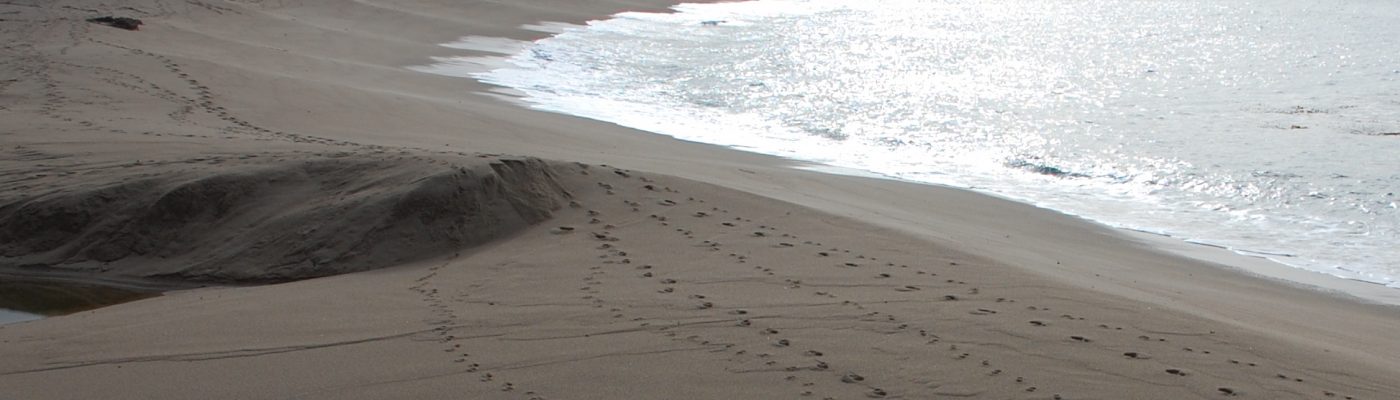
                Rodeo Beach lies just north of the Golden Gate. Yesterday, for a moment, I saw it. I saw the varied black of the sea stacks, the changing white of the spray, the deep blues of the surging ocean, the dappled greens of the field above the bluffs, the shadowed orange of the flowers. Such colors are probably always there, but for a moment I learned to drink them.
                After reading it, my students often say they want to remember The Little Prince and reconnect with their own creativity, imagination, and sense of wonder. They say the little prince is wholly, fully himself, and reminds us to be ourselves. They say they want to remember “what makes them happy.” And that’s wonderful. But I don’t think we should stop there.
                The book sings childhood, and childhood isn’t only about itself. A kid wants to be included, wants to be cared for, wants a stick that can be a sword or mud that can be a pie, but whenever I’ve watched a child really playing, the game isn’t about her. It’s about the friends around her, or the tree she’s climbing, or the creek she’s directing. It’s science and magic and love. Near the beginning of the story, when the pilot draws a crate with three air holes, the little prince can see the sheep inside. For the whole book, he cares whether the sheep is awake, or asleep, or hungry. He cares about others’ lives. He walks across new earth. His imagination shows him life beneath the surface.
                The little prince reminds us to connect with our own hearts, with what gives us joy and makes us question and play–but out heart, in turns, connects us to the world. By approaching with curiosity, joy, and awe, the little prince sees the stars and the desert, and drinks from the secret well hidden in the dunes. He learns from everyone, and shares his heart with everyone. He makes friends with a fox.
                So if you come to this spot–the spot just beneath a star; the spot with a horizon in front of you; the spot with someone else who might be a friend–please do not hurry. Wait for a time. Wonder gives us the world.