293: “Arranged Like Cheap Furniture” (Tony Medina)

                “The past is strange. History is constantly being arranged like cheap furniture.”
                -Tony Medina, I Am Alfonso Jones

                We’re coming up on a year since I went into my first COVID “shelter in place,” and I’m not sure how to interact with that time. Have you ever been walking through a big city square, and you can see the buildings on the far side, but they just don’t seem to be getting any closer? This year’s felt like that. Have you ever been drifting to sleep when your phone beeps, waking you up,  and you can feel both how you slipped into something else for a moment, and how that moment was a wild dreaming fullness that went out farther than you’ll ever understand? This year’s felt like that, too.
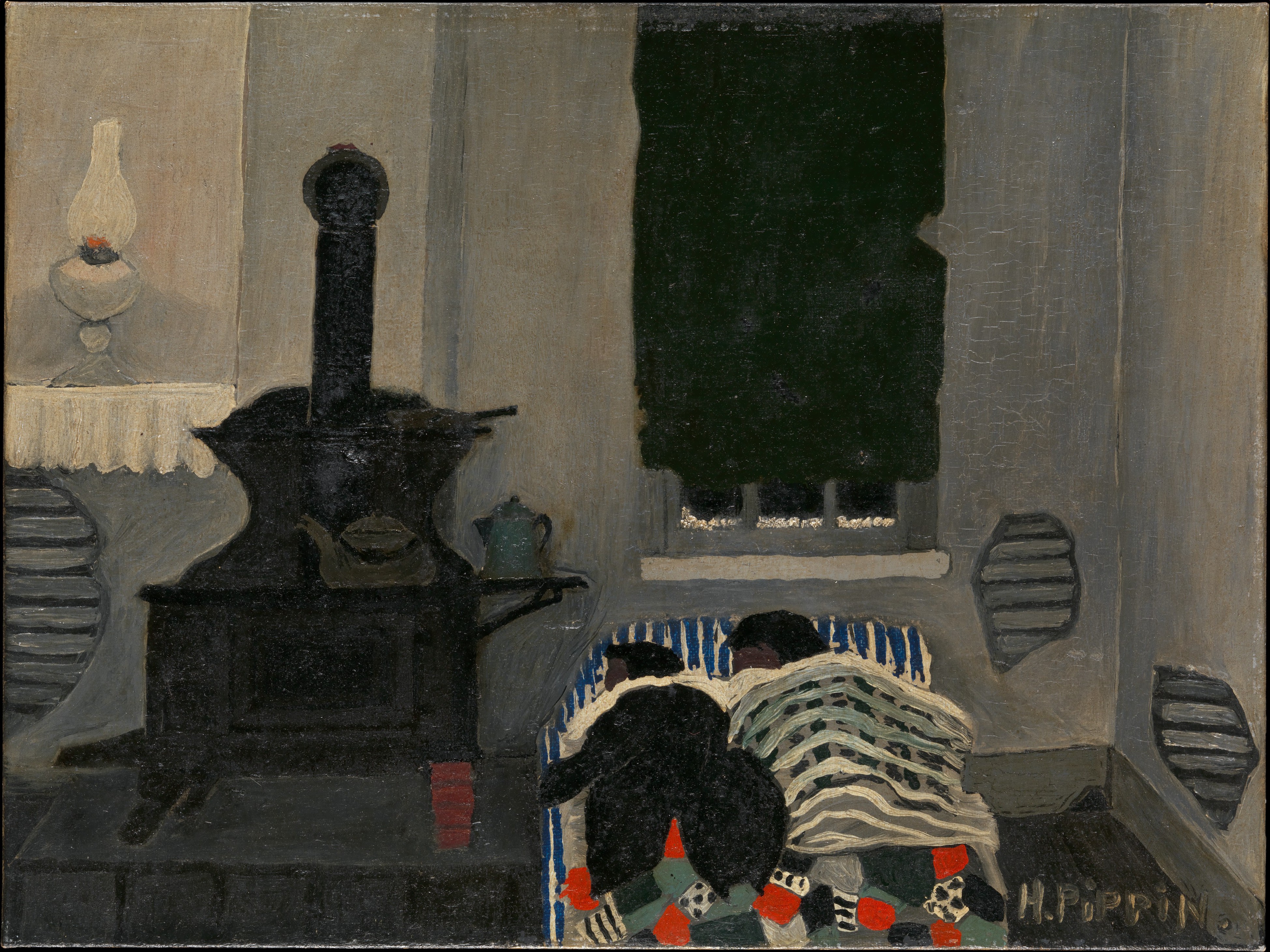
                Then my thinking mind gets hold of it, and things get even more confusing. Sometimes I think about the last twelve months as a time when I “managed almost nothing.” When I didn’t know, and stumbled, at best going on lots of walks through my Midwestern neighborhood, at worst—what? Sitting. Crumpling. Hoping to get rid of the time. I can arrange a story of my memories that fits that statement. In other moments, I think about the last twelve months as a time when we showed we can pull together, care about each other. When I reconnected with people I care about, and did some good thinking about what I really care about, and found new ways to help. I can make a memory sequence that fits those statements, too. Put the striped chair of my teaching under the window that opens to trees, next to the lamp of zoom calls with friends, and the room of this year looks one way. Drag the couch of sleepless nights over by the bookshelf of confusions, and it looks another way. And there I go, dragging around the furniture, trying to figure out what this year was.
                Looking in at myself, I want to stop dragging things around so much. I want to sit for a bit and be here, without worrying what I’ll arrange everything to “be.” Looking out at the world, I want to remember how easy furniture is to push around. I was here for my whole year, and I’m still not sure what this strange thing is. In hearing how things got this way, or what led us here, or the of courses we have to accept, I want to pay attention to who’s moving the furniture. And why.

292: “Through Time” (Sandra McDonald)

                “It’s not that you think too much, it’s that you can peer through time […] The beginning and the end of most things is yours if you concentrate hard enough.”
                -Sandra McDonald, “Sea of Cortez”

                In McDonald’s short story, “you” can follow thoughts forward and back through time: your lover as they are now, and early in their childhood, and late in their old age. The house you’re in, and the builders making it, and time or another construction crew taking it down. One of the things that first drew me to creative writing was this hope to slide through time and space, to freeze a moment, and cast your perspective out from inside the room to another character on the street, to the driver of a car passing by, to a crow. From this moment pushing your niece on a swing to your own swinging, safe near a mother’s hands, and back again, and on into years and years ahead.
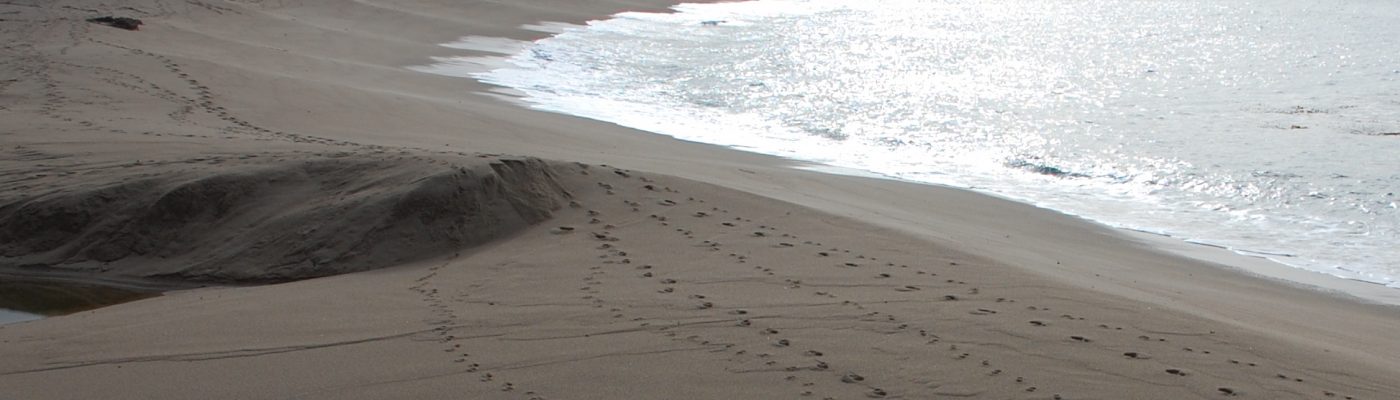
                Beautiful, and curious, and strange. It’s a kind of thought that constructs narratives. Lines. It’s useful. It’s part of how I practice compassion, and how I try to make plans about what I’m doing. And there are other ways a mind can move. I remember sitting near a beach, looking at a tree, and trying to bend all my various thoughts (which were pinging back and forth through what I’d done and what I would do) back to the tree. The rough of the wood. The rise of the sap. The spread of the leaves. A little funny, looking back, that I didn’t get up and go touch it, smell it, put my ear to its trunk and listen. But I think I had noticed, in that moment, how my thoughts reached out in lines of this to that. Cause and effect. In plans. I think I was trying to sit differently in my mind.
                Near another beach, at the end of “Sea of Cortez,” “you” do something similar: “you realize you can’t see the future anymore. Your gift is gone, if it ever was a gift at all.” In the story there’s something like joy, or connection, in that realization. Yesterday I finished reading and went for a walk. After days and days of a sharp, sweet cold down in the single digits, it was so warm the snow was melting, the trees running with drips that held little reflected worlds. The air full of rivulets. For a moment walking wasn’t going anywhere at all. It was wash of sound and color and touch. I want to think that way, to be that way, sometimes, beyond the lines.

291: Listen To Your Mascara (Griggs & Chodosh)

                “There has started to be more demand from the U.S. for quieter, better sounding products.” -Rachael Pink, acoustic engineer at Dyson, in an article that discusses (among other things) how mascara bottles sound when they open

                “You know, I don’t think I have ever like listened to my mascara.”
                “But you have.
                -Mary Beth Griggs and Sara Chodosh on The Weirdest Thing I Learned This Week

                So much of what’s going on I don’t understand. And there’s an interesting flipside—so much of what I do understand, or at least what I take in and act from, I use without noticing.
                There’s a board game called Spice Road which includes these little coins as make believe money. Lots of games have something like that, but Spice Road has the distinction of being the only one in my box o’ games that actually has metal coins. For a while, every time I taught the game to a new group, someone said, oh wow, these are nice. Then one time someone said, why do you associate heavy with nice. I could fumble for an explanation, something about solidly made or unlikely to break, but I think that’s in part missing the point. Heaviness comes up in that article with Rachael Pink, but it’s really “heaviness,” because you can fake it in all sorts of ways—the feel of a lighter sparking, the click of mascara closing. The same materials in different arrangements produce sounds that people describe as more reliable, or cheap.
                I’m not sure I can become conscious of all the different stimuli I’m taking in and letting direct me. I’d like to be more aware, sure. To look behind the curtain of why I think that and see all the strange reasons and whirring gears and sticky-bubble-gum-repairs that leave me repeating this is a nicely made boardgame. I’d like to keep a sense of humor about it. It’s funny how I sputter and turn. And I’d like to remember that I don’t know, that I’m often a puppet that doesn’t see its own strings. That leaves me ready to pause and listen when someone points out something I don’t understand.

290: “Limits of Our Imagining” (Heather Christle)

                “[…] art—and poetry in particular—can make the limits of our imagining apparent at the very moment it moves beyond them.”
                -Heather Christle, The Crying Book

                I’m looking for a new metaphor about “reason” and “passion.” A while ago, when I was struggling with something, someone asked “Are you thinking or feeling about it?” The question didn’t quite make sense.
                Last year in a graduate class I had a strange, delightful experience. We were sitting there, talking over the different ways people imagine the world for themselves. A climbing child creates an idea of a tree. A carpenter creates another idea that goes by the same name, and so does the orchard keeper and the ecologist. I was listening to people discuss how these ideas were different, and then I felt like I was spinning, or floating, or falling. The usual handholds I reach to, the perspectives I take up to make sense of things, were exactly what I was trying to question. So for a moment I hung almost motionless a whirlwind of new possibilities out of reach around me. That moment reminds me I’ve had similar experiences before. They’re like when I was a kid and I jumped off a high rock into water. There was a moment that opened between the ground I’d left and the surface beneath which I didn’t yet see.
                I don’t think I can understand reason and passion as separate. Most of the traditions I’ve grown up in treat them that way. And sure, I’ve felt the two pull apart like my two feet when one hits a patch of ice and suddenly I’m slipping toward the splits. Most of the time, though, when I pay attention to what I’m feeling, reason and passion move together. When I’m talking to someone who’s struggling, when I’m trying to help and it’s going well, I’m thinking and feeling about what they’re telling me. I’m trying to make connections and trying to be open. We separate out “differences” to study what we see, but running is left right, left right, and breathing, and pumping arms. Running’s a whole body, the ground beneath it, the air I’m breathing.
                The running metaphor isn’t the one I want. My feet are separate, even if they work together. Sitting in my experience, emotion and reason feel intertwined. Maybe one’s water swirling down a creekbed, and one’s light bending through the water, but I wouldn’t want to make one water and the other light. They’re both both. So maybe I’m still falling, floating for that wide moment before there’s a splash and I’m somewhere new.

289: Metaphors “Map Meaning” (Taylor & Dewsbury)

                “Under this view, metaphors are not mere linguistic embellishments. Rather, they are foundations for thought processes and conceptual understandings that function to map meaning from one knowledge and/or perceptual domain to another.”
                -Cynthia Taylor and Bryan Dewsbury, “On the Problem and Promise of Metaphor Use in Science and Science Communication”

                I think I can remember experiences in which I had no thought of “time.” Legos on the floor of a childhood room. Clicking together, clicking apart, the shapes they were and weren’t. The shapes they became. I also remember moments when I started focusing on time: getting into the car for a seven hour drive, for instance, and my parents had given me a little digital watch. I looked at it. I looked at it again. Two minutes. And I tried to imagine all the minutes that made up seven hours, to cram them into the backseat with me. I wasn’t sure how they’d go by. In the end they went by with the wind when I wasn’t watching.
                Somewhere, someone must’ve been the first to tell me, time is money. What a capitalist idea. If time were clouds, for instance, you might not mind so much when you watched it drift by. You might think forward to the rain.
                Whatever time is or isn’t, it’s not an apple I can pick or a swing that goes still while I’m watching. Whatever my conception of “time,” it’s a constellation of thoughts I’ve built over lots of experiences and lots of being-tolds and lots of metaphors. It is money. It is something that can be wasted. Like the tide, it waits for no man. It’s a line. An arrow. An ocean. A march. All those metaphors use concepts I can engage more directly with my senses, my actions. I’ve drawn a line, and then used what I drew to try and imagine a geometric ‘line’ that goes on forever. I’ve shivered and laughed in the ocean. I’ve wasted water, and felt awful about it. I’ve counted how much money’s in my wallet. Metaphors are a way we talk, but Taylor and Dewsbury suggest they’re also a means of cognition. They’re a way we think. We take a system we’re familiar with, a system we can touch or see or jump into, and map its properties onto a less familiar system we’re trying to understand.
                That’s pretty wondrous, and it makes me wonder about the worlds I’ve opened up to. If metaphors take a thought-constellation I’m familiar with (swimming in the river; pushing a needle through cloth), and use it to engage with a constellation that’s hard for me to understand (time; astronomy), then don’t my metaphors—my thoughts—depend on the breadth of my attentive experiences? If I never really engage with music, I miss out on music. But maybe I miss out on more. Maybe I miss out on one whole type of system that I could’ve used in struggling with a new idea. To put it another way, if understandings are seeds, and metaphors are planting seeds to grow roots into new soil, then is the diversity of systems I’ve touched and listened to my seed bank?

288: “An Ancient Pond” (Matsuo Bashō)

                Breaking the silence
                
Of an ancient pond,
                
A frog jumped into water—
                
A deep resonance.
                                
-Matsuo Bashō, translated by Nobuyuki Yuasa

                I was once involved in a school wide push to redefine a high school schedule. We talked a lot about when students should have break, and for how long. A group of us were big defenders of “unscheduled time” (what a strange phrase), but our language was all about efficiency. Efficiency of learning. Transition time for a mind moving between tasks. I can’t remember anyone pointing out how strange that was, how much we’d all bought into the idea that sitting still for a moment only had meaning if it made you faster when you got back up. Maybe I wasn’t listening.
                
I’ve been trying to remember other ideas of quiet. Other ideas of rest.
                
Last semester, in discussing a haiku, a friend said: “Those are my favorite kind of poems. The ones that say, there was a sound just now. Hear it.” The comment stuck with me, because I like those poems, too, and then sometimes I’m confused by them. And then sometimes I’m “bored” of them. It’s hard to see what a poem like that might “mean” unless I move over a bit, unless I step out of where I was. In looking at Bashō’s haiku, the translator Yuasa notes, “We start with silence and we end with something moving towards silence, the ripples of the splash.”
                
A neighbor’s walking past my window, shoes in the snow.
                
Voices.
                
Somewhere, a door.
                
I’ll rest here.

287: “The Hill We Climb” (Amanda Gorman)


                “And, yes, we are far from polished, far from pristine, but that doesn’t mean we are striving to form a union that is perfect, we are striving to forge a union with purpose, to compose a country committed to all cultures, colors, characters and conditions of man.”
                -Amanda Gorman, “The Hill We Climb”

                Listening to Amanda Gorman, I feel hopeful.
                In the last months, I’ve talked with old students about trying to decide what jobs we’ll move towards when so many of the systems that coordinate human work are broken. I love teaching, but our education system is so exclusionary, so slow in adjusting, so committed to fracturing thought into smaller and smaller pieces. I love storytelling, but can’t stomach how often “fiction” ends up meaning a few voices are heard and most are drowned out. And every time I get in the car I’m burning oil. My old students say they’re in a similar place: wanting to help, not sure how. And then Amanda Gorman offers us an idea.
                We are not striving to form a union that is perfect.
                We are striving to forge a union with purpose.
                Purpose and commitment. Those are things I can do. Where “perfect” is a judgment on the results, purpose and commitment are working while clarifying in my heart what I’m working toward. Put it this way: I hate grading, and I’m pretty convinced stamping numbers on people causes more hurt than it helps. All the same, for now, grading is part of what I do while I’m doing the best I’ve found. Sometime I might get to leave it behind. For now, I’ll drive less, and learn from people who are pushing energy reform because of all that oil. For now, every semester, I see people growing into their strength and using it more kindly. That’s the purpose. That, says Amanda Gorman, is the kind of thing we can hold onto while composing another moment, another way things are, another now.

286: No ‘Primal Brushstroke’ (Robert Rauschenberg)

                -Robert Rauschenberg, Factum 1 and 2

                I’m not sure I ‘like’ these paintings, but I keep thinking about them. They make me wonder where I hold on, where I let go, and what happens in the moment after I do either.
                Back in undergrad, a friend said education in America had ‘retreated’ from recommending a good life. Education had once talked about what we should be: a person should know some math or have an understanding of history. Then as a society we started seeing the danger of these ‘shoulds:’ who’s making them, and why, and what’s getting left out? What parts of the story do we keep skipping over? Faced with these questions, education (my friend suggested) started trying instead to support students toward their own ends.
                A fellow writer here in Illinois pointed out that, after World War II, Western literature pulled away from objective omniscient third person—the kind of storytelling that claims it can slip between viewpoints, or ‘rise above them,’ and always know the ‘final truth.’ With everything going mad, stories became more aware that they took up one specific vantage point.
                When Professor Lucero introduced the class to Factum 1 and 2, he’d been talking about how (again after World War II) some artists retreated to the act of painting, to “the primal brush stroke,” as something immediate and authentic and real. Here: this was paint on canvas, this was honest. This came from somewhere deep down. Then Rauschenberg comes along and does Factum 1 and 2 to ask, joking and serious as I imagine him, ‘Is it?’ Here’s one “raw red stroke”—here’s another, very similar, imitating myself. You said there was no space for a lie. Are you sure?
                “Retreated,” said Professor Lucero. And the word caught in my head. Where I move back from. Where I move toward. There’s that famous line from Archimedes about the power of a lever if you have the right fulcrum: “Give me a place to stand and I shall move the world.” Maybe we don’t get that fulcrum, that solid place to stand. Sometimes I want something certain, something—a habit, a goal, an approach—that seems solid. Maybe what we get, instead, is movement from place to place. Thoughts that we share. Words in a story. Paint on a canvas, and we go on by letting go.

285: “His Freedom And Yours” (Zubaida Ula and Bob Moses)

                “[…] he said, ‘C’mon guys, let’s show the world that Laramie is not this kind of town.’ But it IS that kind of a town. If it wasn’t this kind of a town why did this happen here? […] And we have to mourn this and we have to be sad that we live in a town, a state, a country where shit like this happens. I mean, these are people trying to distance themselves from this crime. And we need to own this crime. I feel. Everyone needs to own it. We are like this. We are like this. We are like this.” -Zubaida Ula, as quoted in The Laramie Project

                “Don’t come to Mississippi this summer to save the Mississippi negro. Only come if you understand—really understand—that his freedom and yours are one.” -Bob Moses, civil rights activist, 1964

                Back in 2016, I told my friend America was becoming something I didn’t recognize. She said: “It sounds like this was your wake up call. But America has always had this side. You were just lucky enough that you didn’t have to look.” I’ve spent some of today reading about civil rights activists like Bob Moses and Fannie Lou Hammer. As I read about how openly and brutally hate, fear, and prejudice stepped up to shove them down, I thought back to that friend. We are the kind of country where white men violently storm the Capitol yelling “this is our house.” We need to feel that. Look in the mirror, own it.
                And keep working on it.
                Because we are not only like that. We are also like Stacey Abrams and Justice Ruth Bader Ginsburg, like Judy Heumann and Zubaida Ula and Bob Moses. Of course there are some obvious ways where “my”—my sandwich, my money, my candidate—can mean “not yours.” But there are so many more ways where “my”—my health, my peace, my freedom—and yours are one. That’s a different kind of ours. That’s the one I choose for our house. I’m working to understand, so I can help with the work.

284: “The Phrase ‘Each Other'” (Rumi)

                “Out beyond ideas of wrongdoing and rightdoing,
                there is a field. I’ll meet you there.

                When the soul lies down in that grass,
                the world is too full to talk about.
                Ideas, language, even the phrase “each other” doesn’t make any sense.” -Rumi

                “Each other” doesn’t make much sense to me. More and more, these days, I don’t feel like an ‘individual.’ The metaphor that keeps coming back, instead, is one string on a guitar. Sometimes it’s a replacement string, left alone in the drawer of this quiet apartment. Not much happens. I’m curled up. Still. Waiting. Sometimes I pick up a book, or look out the window, or water my basil plant, or listen to someone, or write to a friend, or go for a walk, and there’s a guitar again. The bridge and the headstock, the frets, the other strings, and we’re singing. 
                This morning felt kind of fuzzy. Thinking about that now, I don’t mind. I can like the resting times, curled up in the apartment. Then I was standing on a friend’s porch, cold-toed because I’d worn sandals in the freezing snow (I wasn’t there for long). The air wasn’t still anymore. It vibrated. A harmony. We talked about cookies and hot chocolate and plans, and I was more of me in not being only me. The shake of that sound has stayed with me all day, and now it’s back in writing this to you. For a moment, when you read, we’ll be a chord played together. Maybe we always are?
                Looking for “me” on New Years’ Eve, 2017, I walked up into the hills above Santa Rosa, CA. Through trees. The shadows of leaves. Past stones. A rising moon. I walked to a lake, the ripples soft along the shore, and turned back. Stars. Clouds. Hills. The city lights. On my way back down, at midnight, I could hear people cheering. I could hear a tree creaking as it leaned against another. What if the struggle isn’t to ‘find myself,’ but to move past the eggshell of how I imagined ‘myself’ as all this hatches to another moment?