In imagining how the earth might end: “or maybe the earth will shrink / it will get so tiny that we can hold it in our hands / and we’d see every side, every part that we used to ignore / maybe then we’d feel big enough to start protecting it.” -Tillie Walden, “The Fader”
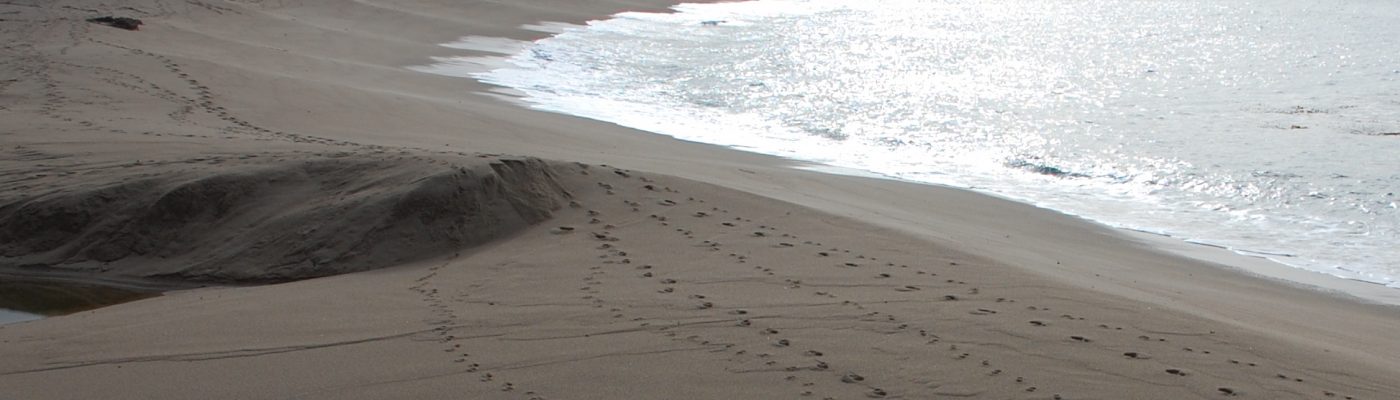
A few weeks ago, when I started trying to write about Tillie Walden’s “The Fader,” I’d recently gone swimming off the coast of Orcas Island. The water was on the edge between cold and cool. The waves lapped with sunlight, washing out toward other islands. For me, islands have a special way of showing the size of the sea. Looking at that little tuft of land, off on the horizon, makes me feel distance. And I said I swam, but I barely moved away from the beach I came from. A few strokes. I was weightless for a moment, diving beneath the water. Out past me were more beaches, more tufts of land, more watery valleys.
I think “The Fader” catches my heart because of how it invites me to think about scale. Last spring a friend pointed out that we spend most of our time in contexts designed for someone about our size. Rooms. Chairs, tables, doorways, cars, refrigerators, as though a human body that’s somewhere around 5 or 6 feet is the measuring stick for the world. My friend said that’s why they loved backpacking. Forests, ridges, rivers, snails, all these have their own scales. And then, of course, in other conversations, we say how small we are—specks of dust on the speck of dust that is earth in the smudge that is the Milky Way in the cloud (or the ocean?) that some of us call the Laniakea Supercluster. And in other conversations we’re so large. Large enough to be pushing (or have pushed) other animals to extinction. To fish until fisheries collapse. To shift the climate. And then Walden writes and draws. My familiar sense of scale shakes, and past it, I wonder what it would be like to feel our smallness (and the world’s smallness), our expanse (and the world’s expanse).
 Azlan Guttenberg Smith